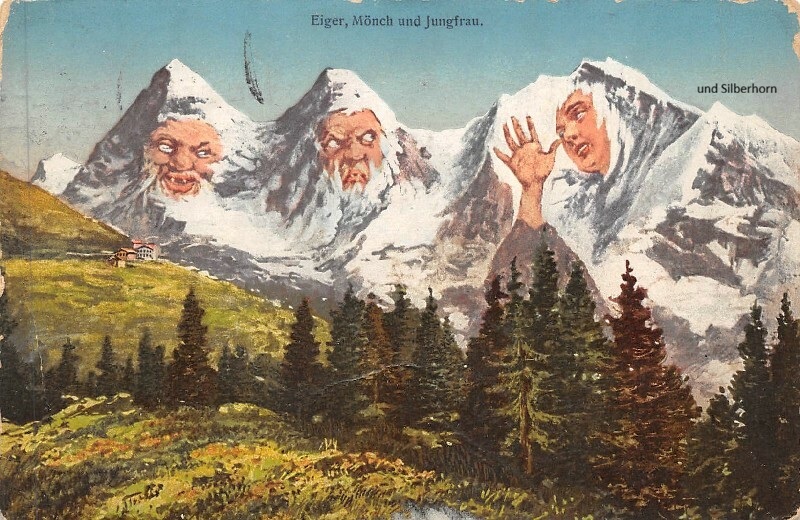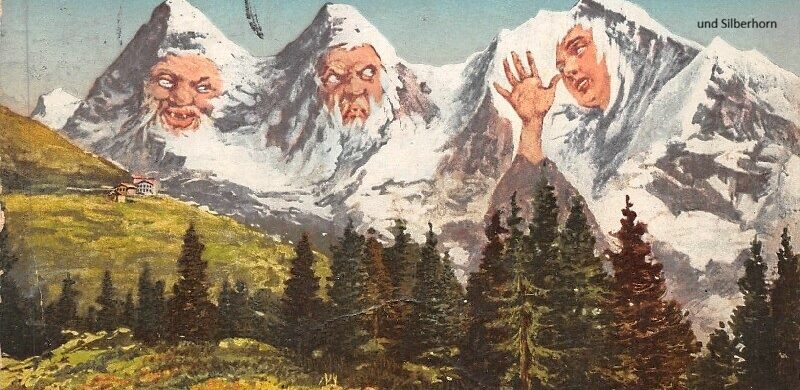
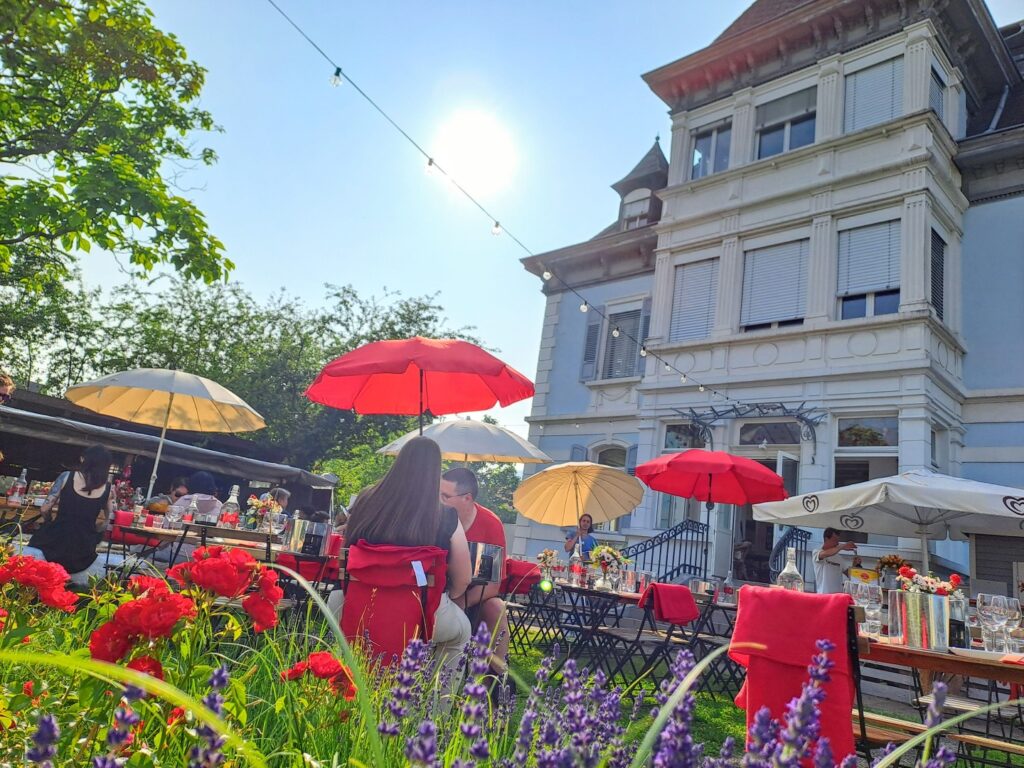
There is something most people don’t know when they sit down in our Swiss cheese fondue garden terrace: the mountains in front of you aren’t just beautiful. They’re famous twice over — once for being themselves, and once for secretly being Middle-earth, J.R:R Tolkien’s fantasy world of the Hobbit and Lord of the Rings. Over 150 million books sold and still this is a little known fact.
“I left the view of Jungfrau with deep regret: eternal snow, etched as it seemed against eternal sunshine, and the Silberhorn sharp against dark blue: the Silvertine (Celebdil) of my dreams.” – J.R.R. Tolkien in a letter to his son
The 1911 Swiss Trip that created The Hobbit & Lord of the Rings
In 1937, an Oxford professor named J.R.R. Tolkien published a book called The Hobbit. It went on to become The Lord of the Rings, one of the best-selling and most influential stories ever written, the invented world we now call Middle-earth — Hobbits, dragons, elves, and a vast mountain range called the Misty Mountains that the characters must cross at terrible cost. What most readers never learn, because it isn’t printed on the book jacket, is that Tolkien didn’t invent that mountain range from nothing. He built it from memory — specifically, from a walking trip he took through Switzerland in the summer of 1911, as a nineteen-year-old, years before he’d written a single word of the story that would make him famous. Tolkien himself said so directly, late in his life, in a letter to his own son: the hobbit’s crossing of the mountains was based, in his words, on his own adventures in 1911. This wasn’t a vague, dreamy inspiration. He named the actual mountain.
That mountain — and three of its neighbours — are visible right now from where you’re sitting.
A Garden With the Whole Story Sitting in Front of It
Most restaurants with a mountain view can tell you which mountain you’re looking at. We can tell you which mountain, and which page of which famous book it became.
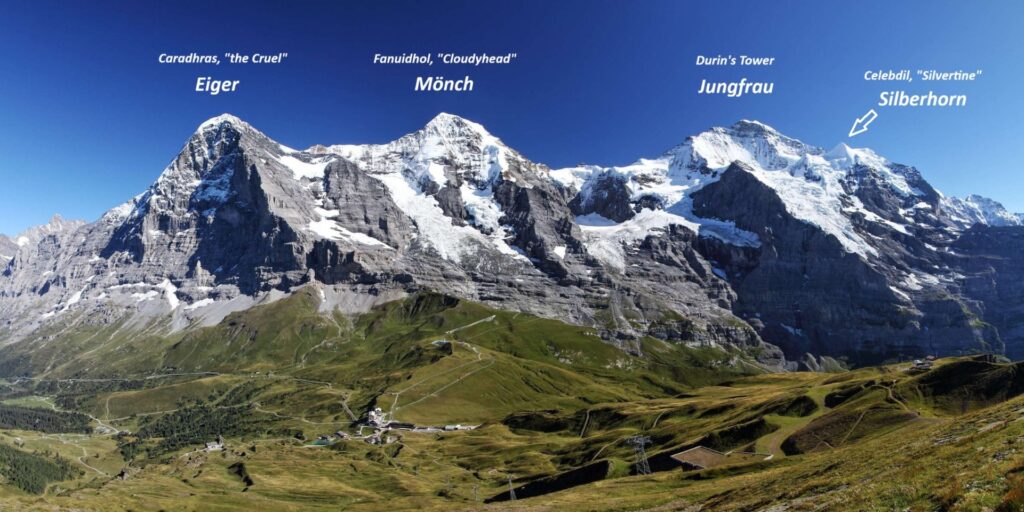
From our garden, on a clear evening, four peaks are visible in a single unbroken sweep: the Eiger, the Mönch, a smaller sharp blade of rock called the Silberhorn (tucked against its much bigger neighbour), and the Jungfrau, rising up behind all three. J.R.R. Tolkien stood beneath this exact wall of mountains in 1911. Decades later, he wrote to his son and named the Silberhorn specifically — using almost the same words, translated into his own invented Elvish language, that he later gave to one of the three mountains his characters must cross above the underground kingdom of Moria.
Once you know to look for it, the whole mountain range turns into a kind of key:
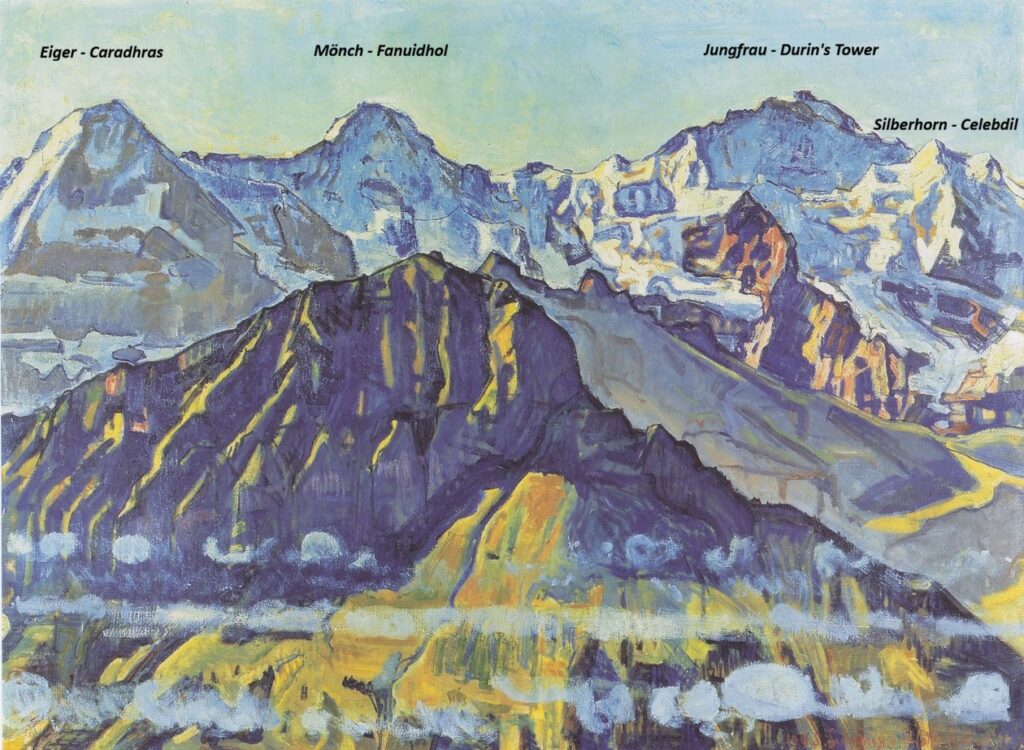
- The Eiger, whose German name literally means “ogre,” became Caradhras, “the Cruel” — the mountain that nearly buries Tolkien’s heroes alive in snow.
- The Mönch, which almost always wears a thin scarf of cloud around its summit (for real, scientifically explainable weather reasons, not just for atmosphere), became Fanuidhol — which translates, in Tolkien’s invented language, as “Cloudyhead.”
- The Silberhorn — that sharp little peak on the Jungfrau’s shoulder — lent its name directly to Celebdil, the “Silvertine.” Tolkien’s own letter says so, in his own handwriting.
- The Jungfrau herself, which was being tunnelled into by an ambitious new railway at the very time Tolkien was passing through, gave him the idea for Durin’s Tower — a chamber built into a mountain’s summit, reached by climbing up through the inside of the mountain rather than around it.
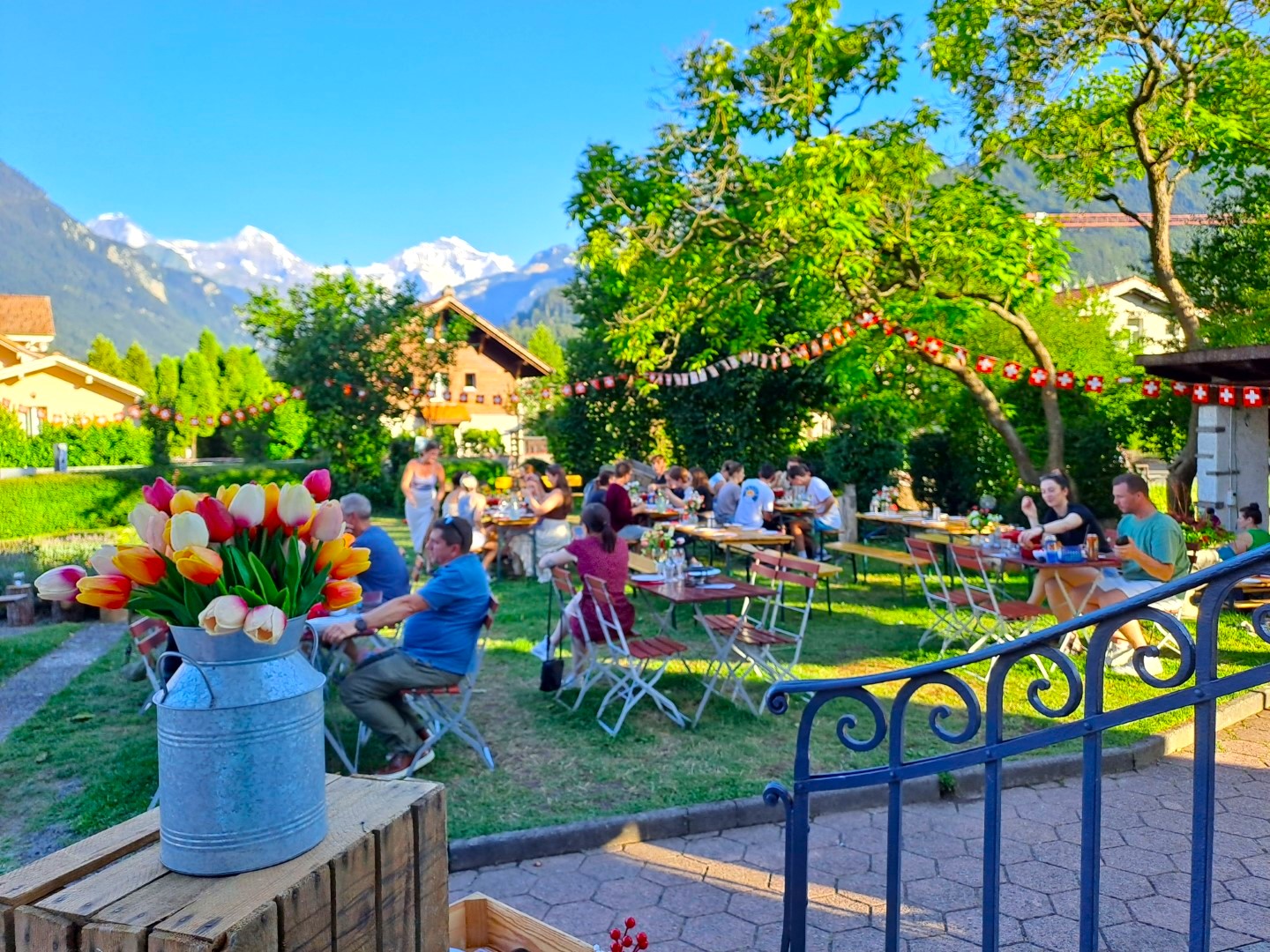
You don’t need to have read a word of The Lord of the Rings to enjoy your evening here. But once you know what you’re looking at, it’s genuinely hard to see these mountains as just scenery ever again. A teenager once sat somewhere very near this valley, looked at exactly this view, and twenty-six years later turned it into one of the most famous fictional landscapes ever written.
The Hobbit Habit That Turns Out to Be Correct
Now for the part that connects all of this to your plate.
Tolkien’s hobbits are famous for one specific joke: they eat seven meals a day. Breakfast, second breakfast, elevenses, luncheon, afternoon tea, dinner, and supper — and they’re genuinely offended by anyone who suggests this is excessive. It’s one of the most quoted bits of the whole book, usually played for laughs: greedy little hobbits, more interested in food than adventure.
Except — and this is the part we’ve written about in more detail in a previous post about the Hobbit’s absolute need for 7 communcal feasting meals a day — Tolkien’s own real letters about his 1911 Swiss trip describe exactly the kind of demanding, calorie-hungry physical effort that makes frequent small meals a genuine necessity rather than a comedy bit. Long days walking on foot, heavy packs, early starts, modest food eaten standing up on the trail because there was no time to stop properly. A body working that hard for six or eight hours a day doesn’t want three big meals. It wants food often, in smaller amounts, refilled before it actually runs out of fuel. Tolkien lived through exactly that, in this exact region, the same summer he was absorbing the mountain views that would become the Misty Mountains. The hobbits’ “ridiculous” eating habit and Tolkien’s own real mountain-walking diet are, very plausibly, the same habit — one written as a joke, one lived as necessity.
Fondue fits this pattern almost perfectly. Nobody eats a fondue in one quick course and stops. The pot stays hot, the bread keeps coming, the conversation runs long, and an hour in, you’re still eating — not because anyone’s being greedy, but because that’s simply how a shared pot of melted cheese over a low flame works. It’s a meal built to refuse to end. If hobbits had invented a Swiss national dish, there’s a fair argument this is the one they’d have chosen.
Second Breakfast, But Make It Dinner
So here’s the actual invitation: come to the garden while there’s still good light on the Eiger and the Mönch, and treat your evening the way a hobbit would treat any meal — as the main event, never an interruption to something more important. Order the fondue. Let it run long. Watch the cloud sit on the Mönch the way it almost always does, and know there’s a real scientific reason for that — and that the same mountain has a name, in a language invented by an Oxford professor, that simply means “Cloudyhead.” Pick out the Silberhorn’s small, sharp shape against the much bigger shoulder of the Jungfrau, and know that a teenage Tolkien picked out that exact same shape, from somewhere very near here, and never stopped thinking about it for the rest of his life.
And when the bread runs low and someone at your table asks whether it’s too much to order more, the honest answer — on this terrace, with this view, in the spirit of the one fictional species that got meal-frequency completely right — is no. Hobbits would never make that mistake. Neither, tonight, should you.
Book your table for this Hobbit cheesy delight here: https://fonduevilla.com/reservations
Read the backstory of the 7-Meals a Day & the Origin of the Real Misty Mountains
For the full story of how Tolkien’s seven-meals habit connects to real survival eating on a Swiss mountain trail, read our companion piece about the Hobbit’s 7 meals a day habit here.. For the complete account of how these four mountains became the Misty Mountains, read “Eiger, Mönch & Silberhorn, the Real Misty Mountains” on iconsofinterlaken.com.