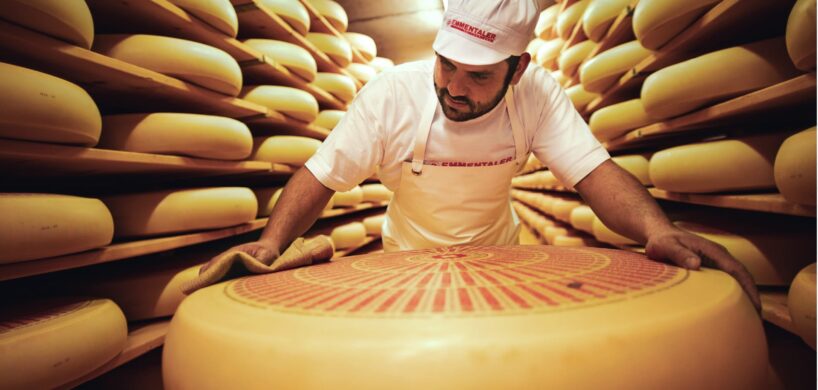
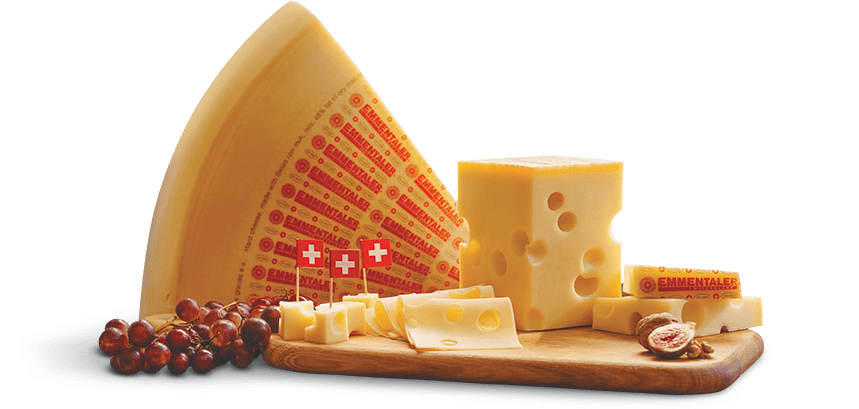
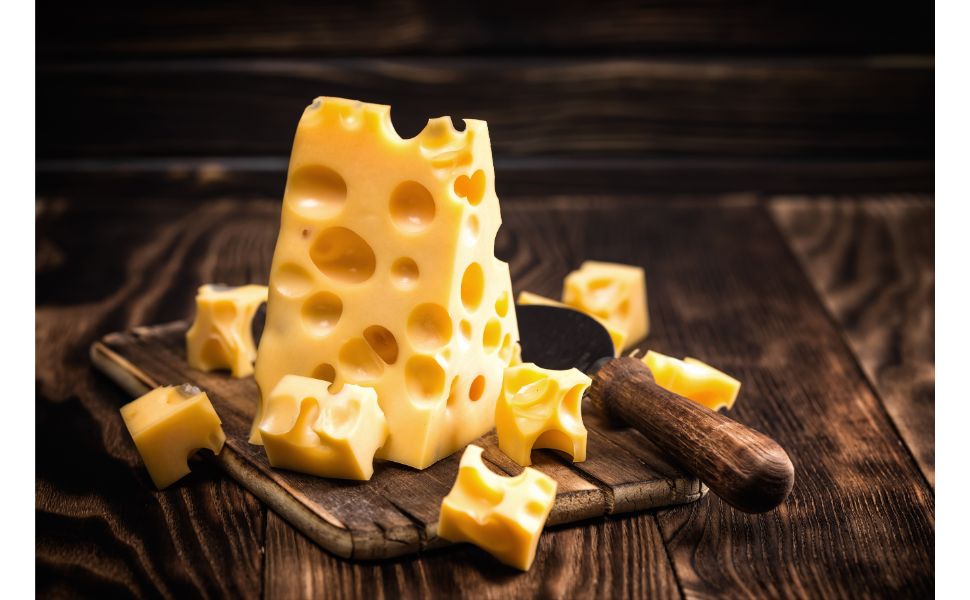
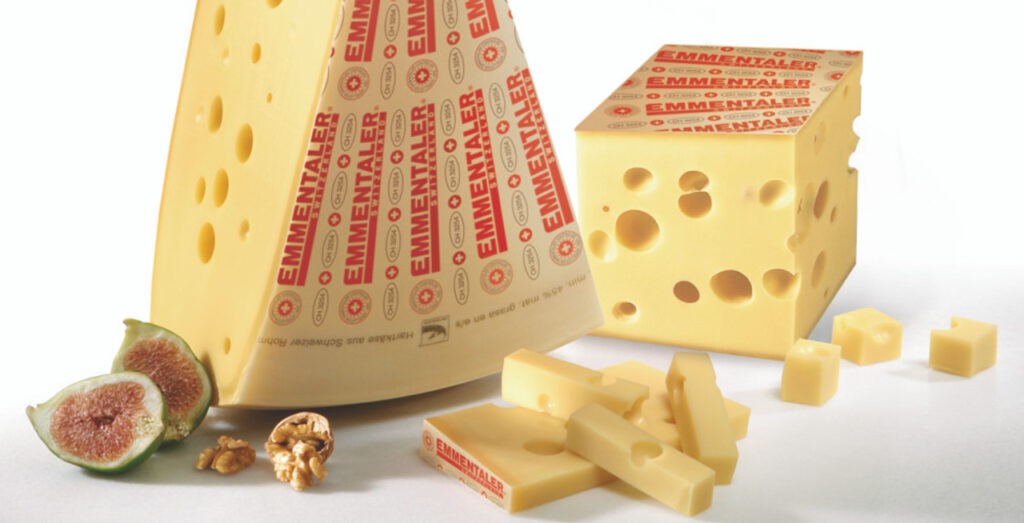
Swiss Emmentaler Cheese is the iconic cheese with the picture perfect cheeseholes that kids draw when they want to display a cheese. In the US it’s known as ‘Swiss cheese’ and – apart from its iconic holes – it’s actually the world’s largest cheese. Yes even larger than Parmigiano.
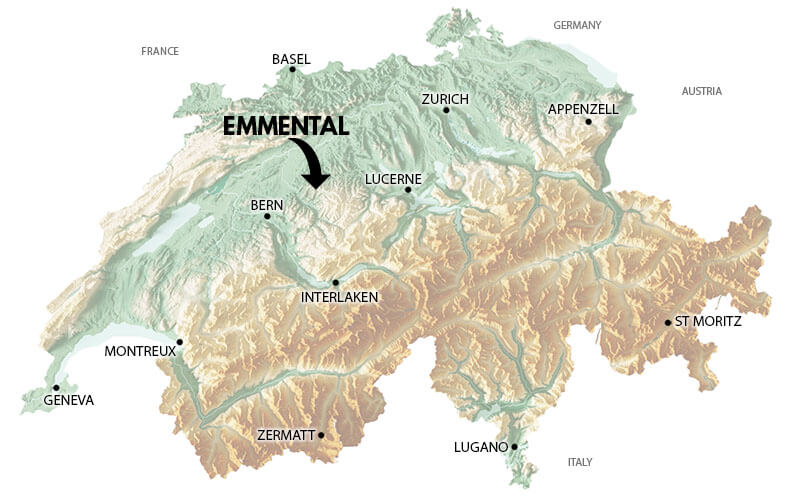
This massive cheese orginates from the Emmen Valley (literal translation of Emmen-Tal) just one valley away from Interlaken. Eighty percent of the production of all Emmentaler AOP cheese comes from this region, with 150 Swiss producers making this delicious cheese that is a base ingredient for Swiss cheese fondue.
How Swiss Emmentaler Fondue Cheese is made
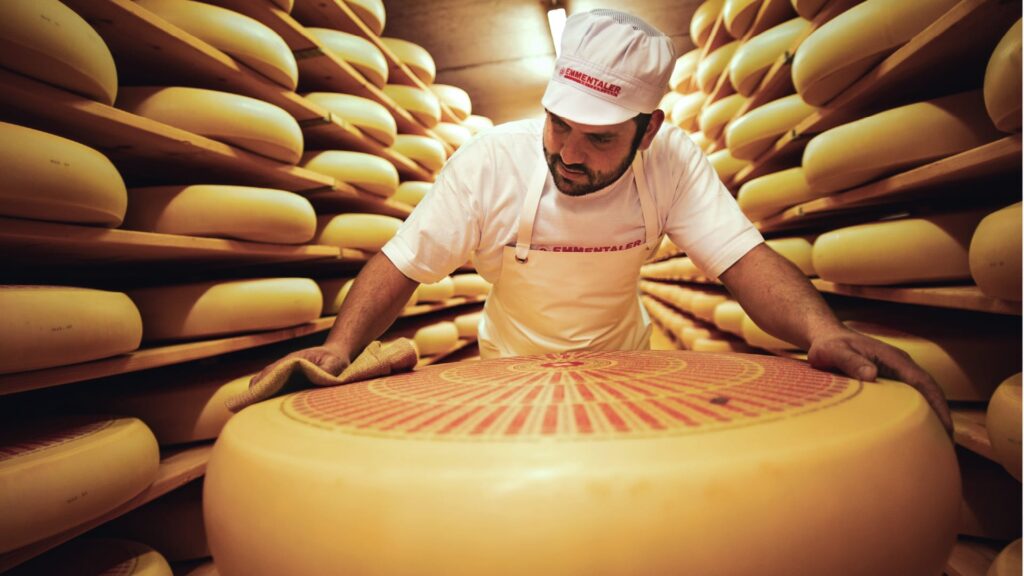
Emmentaler cheese, known for its distinctive holes and nutty flavor, is produced through a traditional artisanal process that has remained largely unchanged for over a century. The Emmentaler cheese production involves several key steps, primarily utilizing raw milk from cows that are not fed silage but uniquely graze the pristine Swiss alpine meadows only.
Emmentaler Cheese Production Steps
For Swiss cheese to be called Emmentaler it needs to follow a range of strictly defined production steps.
- Milk Collection: Fresh, untreated raw milk is collected from local farms, ensuring it is transported within 20 kilometers to maintain freshness. This milk comes exclusively from cows that graze on grass and hay and the milk has to come from the Emmentaler region.
- Warming the Milk: The milk is warmed in a copper kettle to approximately 32°C (90°F) while being stirred continuously. During this process, selected bacterial cultures are added to initiate fermentation.
- Adding Rennet: Rennet is introduced to the milk, causing it to coagulate and form curds. This step is crucial as it helps bind the fat and protein in the milk.
- Cutting the Curds: Once the curd has formed, it is cut into small pieces (about 4-6 mm) to facilitate whey separation.
- Heating the Curds: The curds are then gradually heated to around 53°C (127°F) to further expel whey and develop texture.
- Pressing the Cheese: The curds are placed into molds and pressed under significant weight (up to 2,000 kg) for about 20 hours. This pressing helps achieve the desired moisture content and texture.
- Salting: After pressing, the cheese wheels are soaked in a brine solution for salting, which enhances flavor and aids preservation.
- Maturation: The cheese wheels are moved to a fermentation cellar where they mature for at least 120 days. During this period, propionic acid bacteria ferment lactose into lactic acid and produce carbon dioxide, which creates the characteristic holes or “eyes” in the cheese. The initial maturation occurs at temperatures between 19-24°C (66-75°F), followed by storage at around 12°C (54°F) to halt further hole formation and allow deeper flavor development.
- Regular Maintenance: Throughout the maturation process, each wheel is turned weekly and may be rubbed with saltwater to maintain moisture levels and enhance flavor.
Characteristics of Emmentaler Cheese
- Size: Emmentaler is typically produced in large wheels measuring about 90 cm in diameter and weighing up to 120 kg.
- Flavor Profile: The cheese has a mild, nutty flavor attributed to its long maturation process and specific bacterial cultures used during production.
- Holes Formation: The iconic holes result from trapped carbon dioxide during fermentation, a unique feature of this cheese variety.
- Fondue use: One of the common uses of Emmentaler is as a base ingredient for a traditional Swiss cheese fondue. Its melting properties and nutty flavour make it a great fit for a fabled fondue. It gets often paired with Gruyere or Vacherin Fribourgois, two other iconic Swiss cheeses, to create a delicious Swiss cheese fondue blend.
Emmentaler cheese exemplifies a blend of traditional techniques and quality ingredients, contributing to its status as a beloved culinary staple worldwide.
Learn to make Swiss cheese on a Swiss Alpine Farm
If you want a handson experience of learning how to make Swiss cheese visit our cheesemaking workshop at a Swiss cheesefarm. Get your hands in the milk, cut the whey, press the wheels and flip them after draining them of the redundant liquid. This fun cheesfarm visit and cheesemaking workshop will teach you all the tips & tricks of making real Swiss cheese while eating a lot of it at the same time.
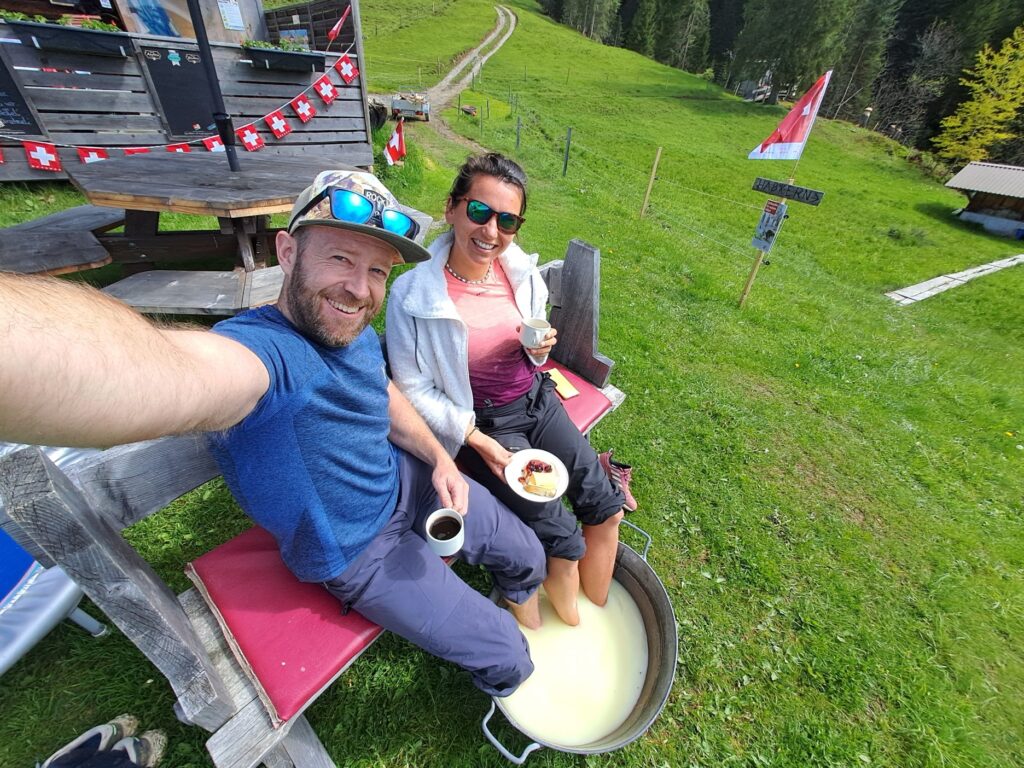
You even get to take a rejuvenating whey cheese footbath with an amazing view!