If you stand in the shadow of the Unspunnen Castle ruins, gazing up at the moss-covered stones from the 12th century, you aren’t just looking at a medieval fortress. You are looking at the birthplace of Swiss national unity, the site of an unsolved crime involving an 83.5kg stone, and—believe it or not—the spiritual ancestor of your Swiss cheese fondue dinner.
Welcome to the story of Unspunnen, a legend that weighs heavy on history but light on the heart.
A Ruin with a View (and a Vibe)
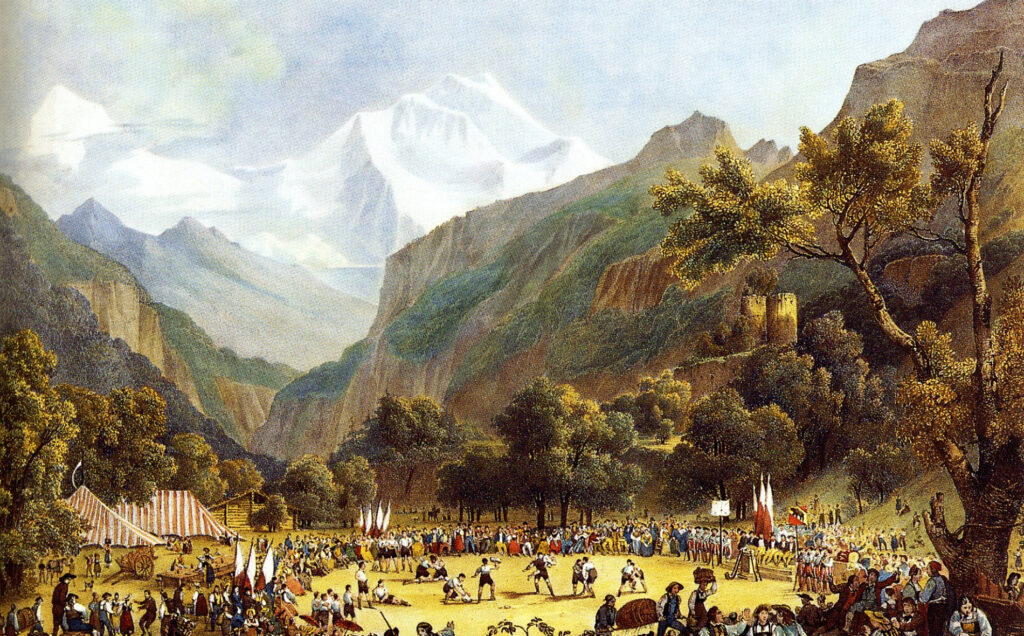
Before the festivals and the flying stones, there was the castle. Built in the 12th century, Unspunnen Castle watched over the trade routes between the Bernese Oberland and the rest of Switzerland. Today, it stands as a romantic ruin, a silent witness to centuries of change.
Unlike many sterile museums, Unspunnen is accessible, tactile, and atmospheric. It sits on a hill in Wilderswil, offering a perfect framing of the Jungfrau mountain. It was here, in the meadows below these crumbling walls, that a group of visionaries decided to change the course of Swiss history.
The “Woodstock of the Alps”
You might know Woodstock as the defining moment of American counter-culture in 1969—three days of peace, music, and mud that united a generation. Unspunnen is Switzerland’s Woodstock.
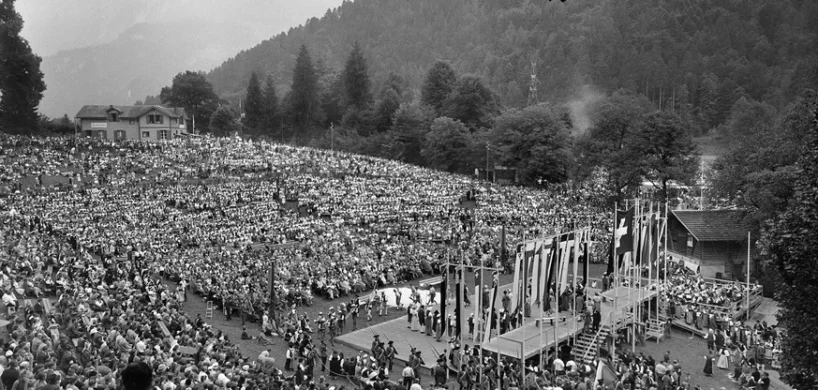
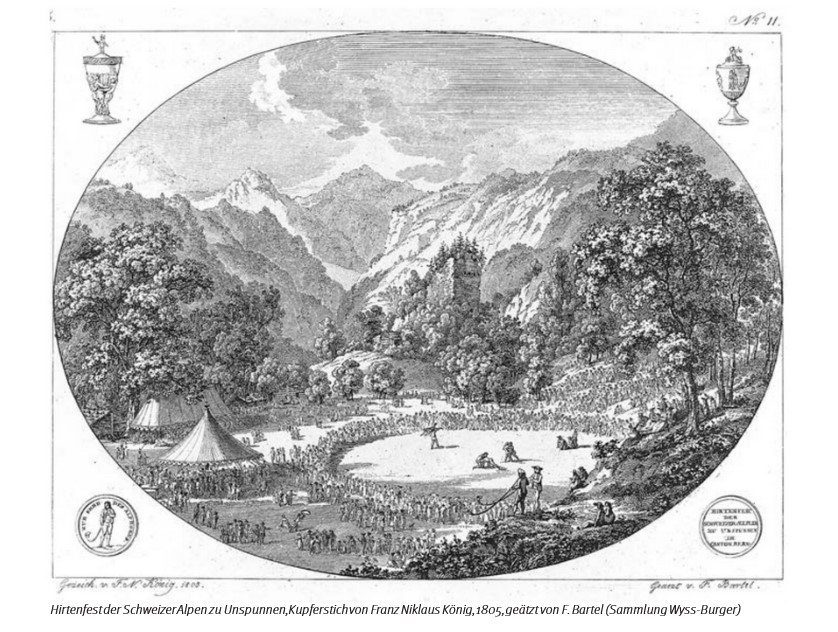
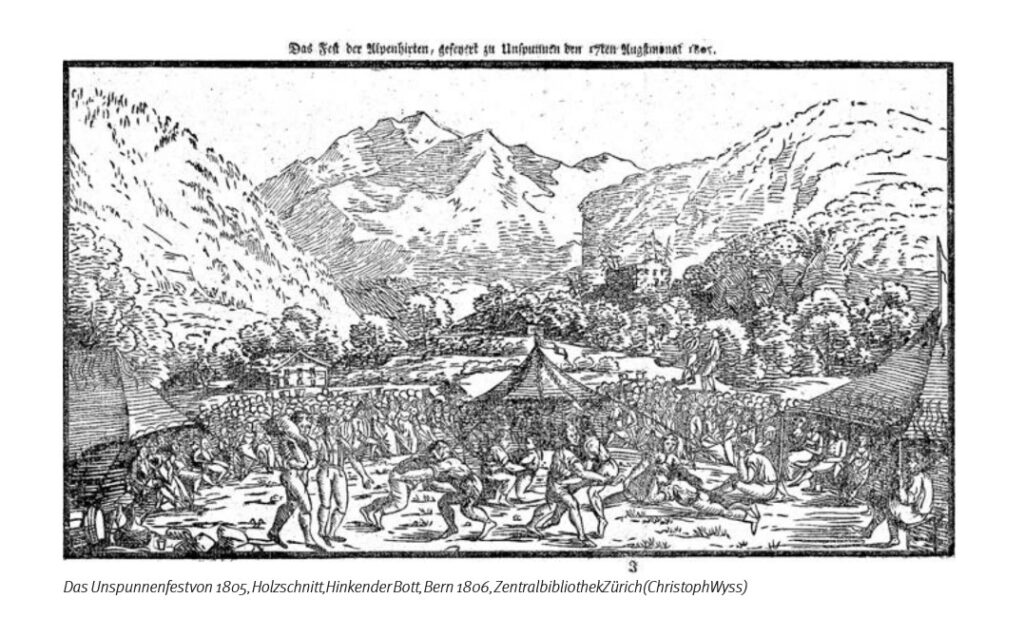
While the soundtrack features alphorns instead of electric guitars, and the dress code is embroidered Tracht instead of tie-dye, the cultural impact is strikingly similar. Just as Woodstock became a symbol of a generation seeking connection, the first Unspunnen festival in 1805 was a revolutionary gathering of souls seeking a shared identity.
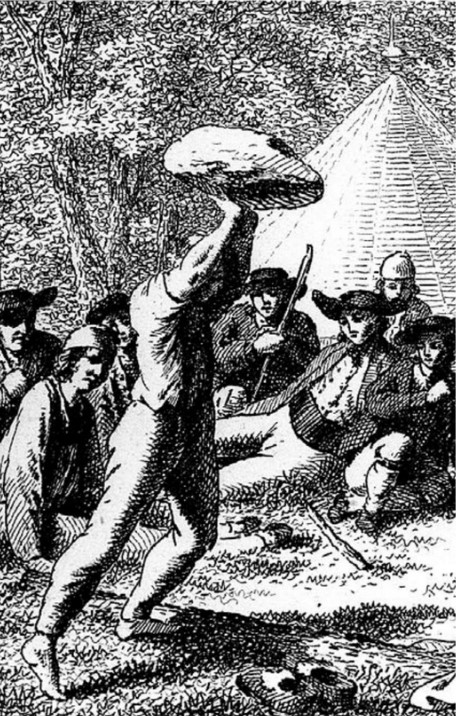
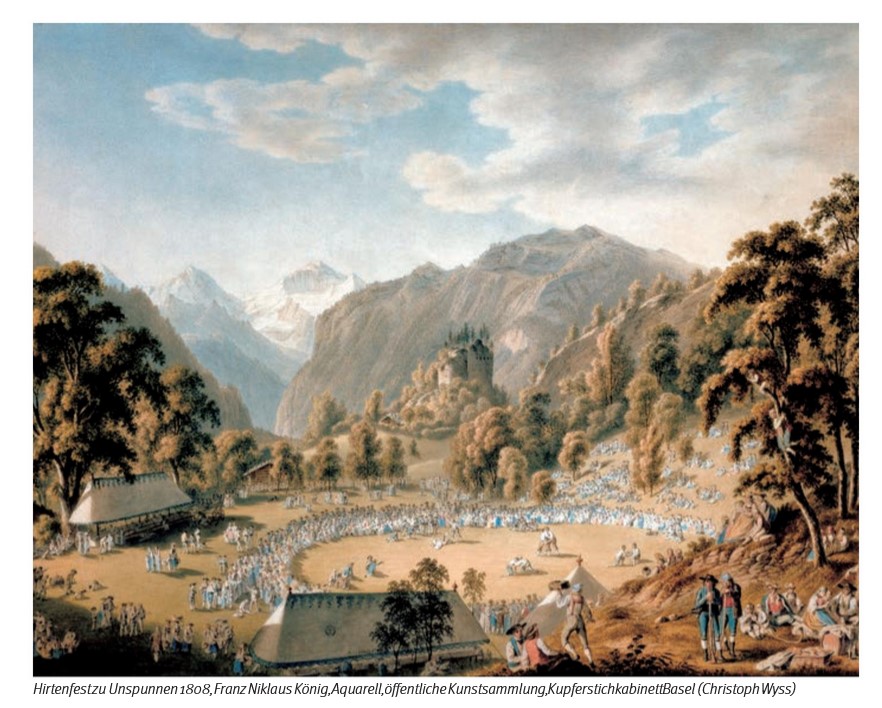
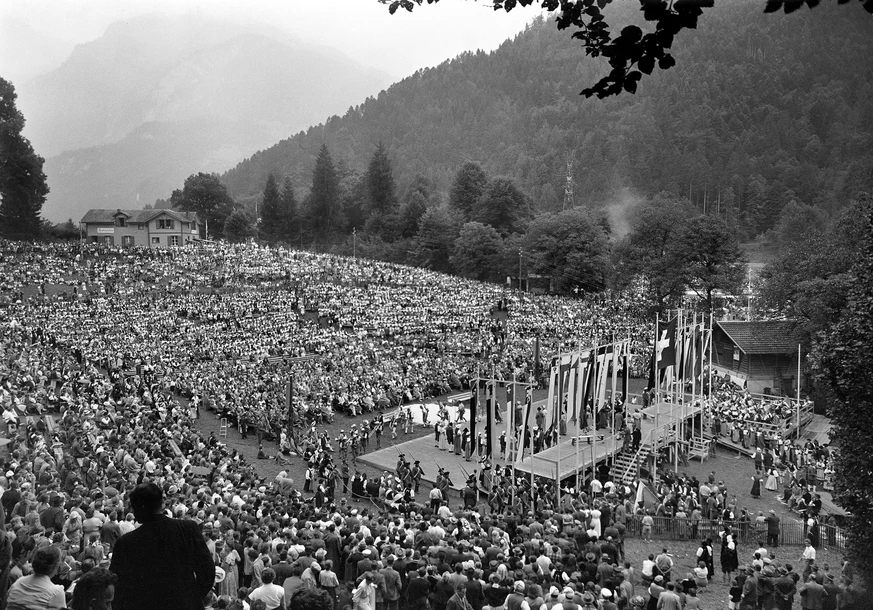
Switzerland at the time was fractured. Napoleon had reshuffled the political deck, and tensions between the aristocratic city of Bern and the rural farmers of the Oberland were at a boiling point. The country needed healing. The organizers threw a massive “Festival of Reconciliation,” inviting the urban elite and the alpine herdsmen to mingle.
It was radical. For the first time, aristocrats in silk stood shoulder-to-shoulder with farmers in linen. They didn’t meet as rulers and subjects, but as fellow Swiss. This “Alpine Woodstock” didn’t just entertain; it forged the modern Swiss soul, proving that despite different dialects, classes, and cantons, they were one people.
The Olympic Games of Folklore
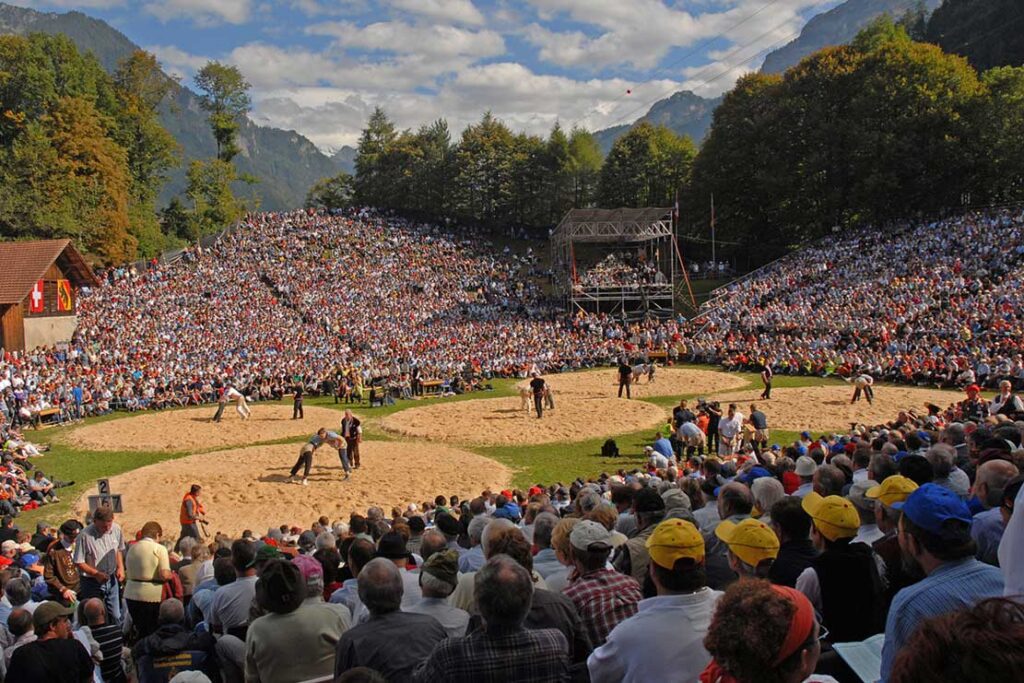
Today, the Unspunnen Festival is held roughly every 12 years, turning Interlaken into the epicenter of Swiss tradition. It is a spectacle of alpine culture that attracts over 100,000 visitors:
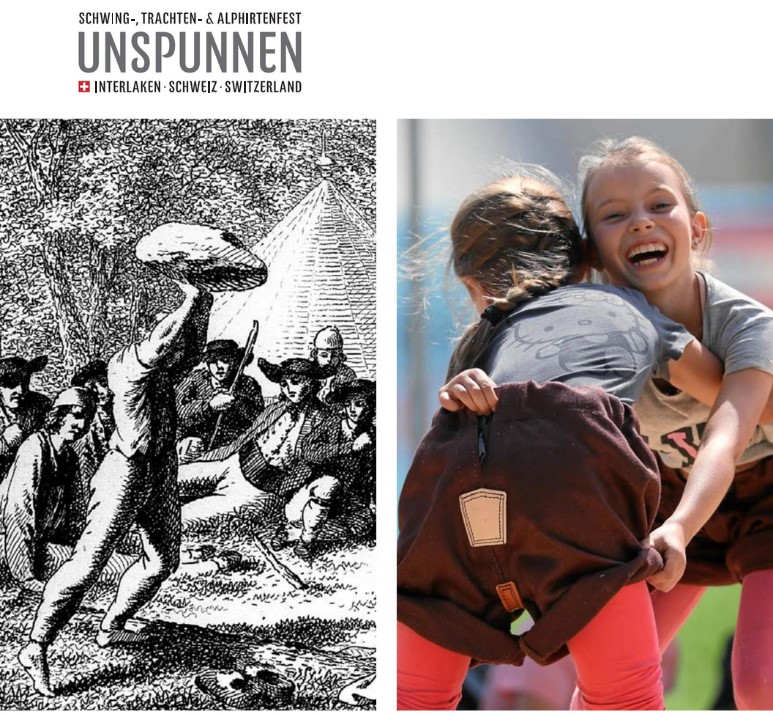
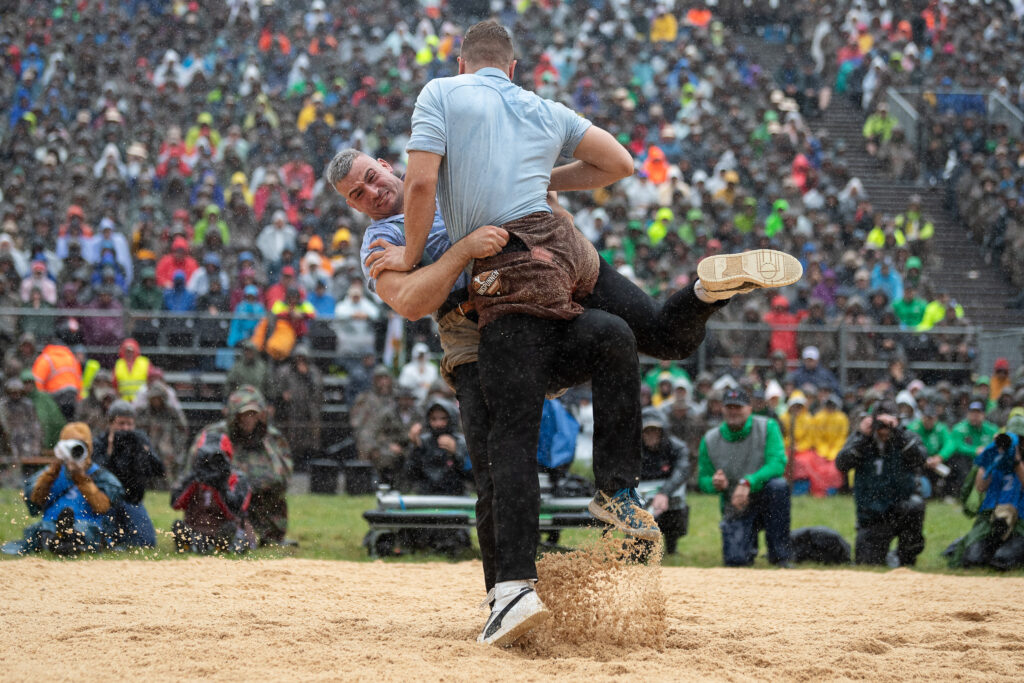
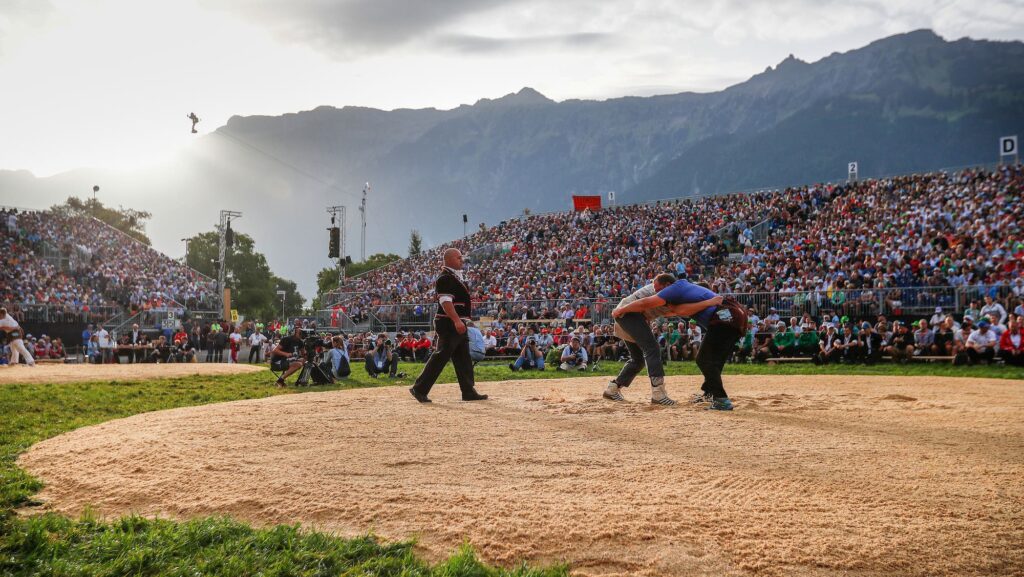
- Schwingen (Swiss Wrestling): The “sawdust wars” where gentle giants wrestle by gripping each other’s burlap shorts. It is a sport of honor, where the winner always brushes the sawdust off the loser’s back. Think of it like Swiss Sumo wrestling!
- Schwingen (German for “swinging”) is a traditional Swiss form of folk wrestling that takes place in a circular arena covered in sawdust.
- Attire: Wrestlers wear special, coarse canvas-like wrestling shorts (Schwinghosen) with a sturdy leather belt over their trousers.
- Objective: The goal is for one wrestler to use various holds and techniques to throw their opponent onto their back and pin both shoulder blades to the sawdust.
- Rules and Etiquette: Matches are typically five minutes long and begin and end with a handshake. A key tradition dictates that the winner must brush the sawdust off the loser’s back as a sign of respect.
- Techniques: There are over a hundred potential moves, with common throws including the Kurz, Übersprung, and Wyberhaagge
- Yodeling & Alphorns: The soundtrack of the Alps echoing off the Jungfrau, connecting the valley to the peaks.
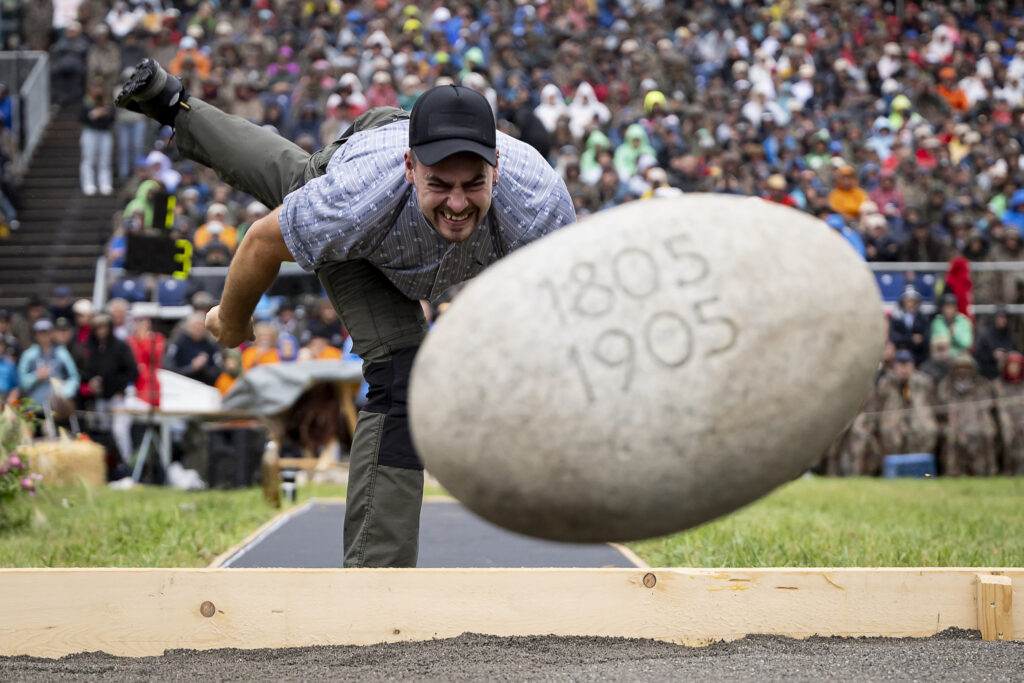
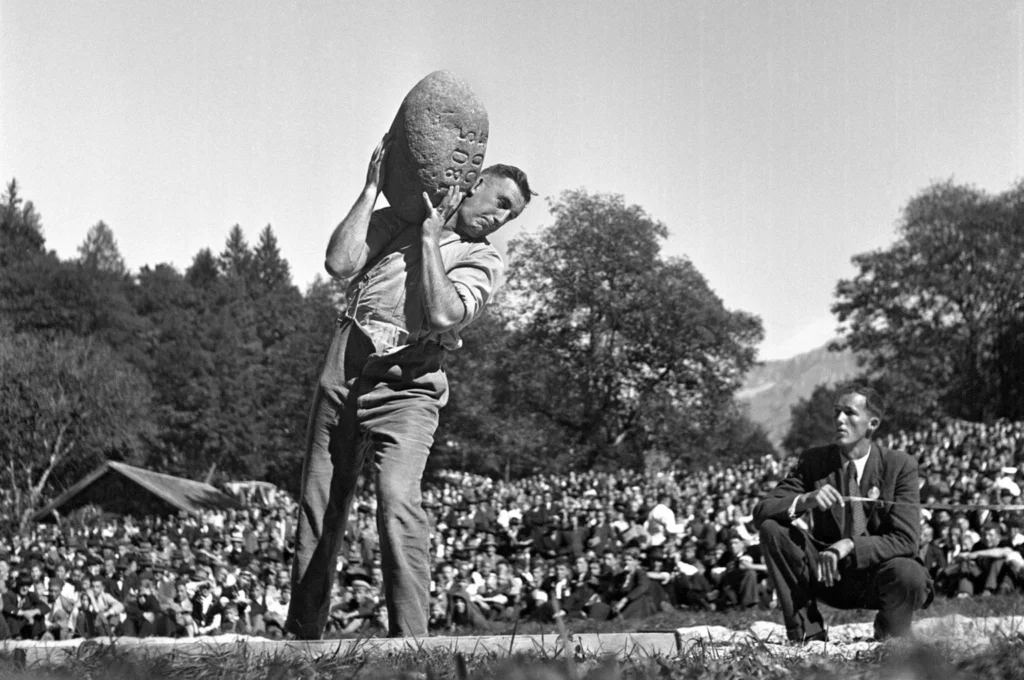
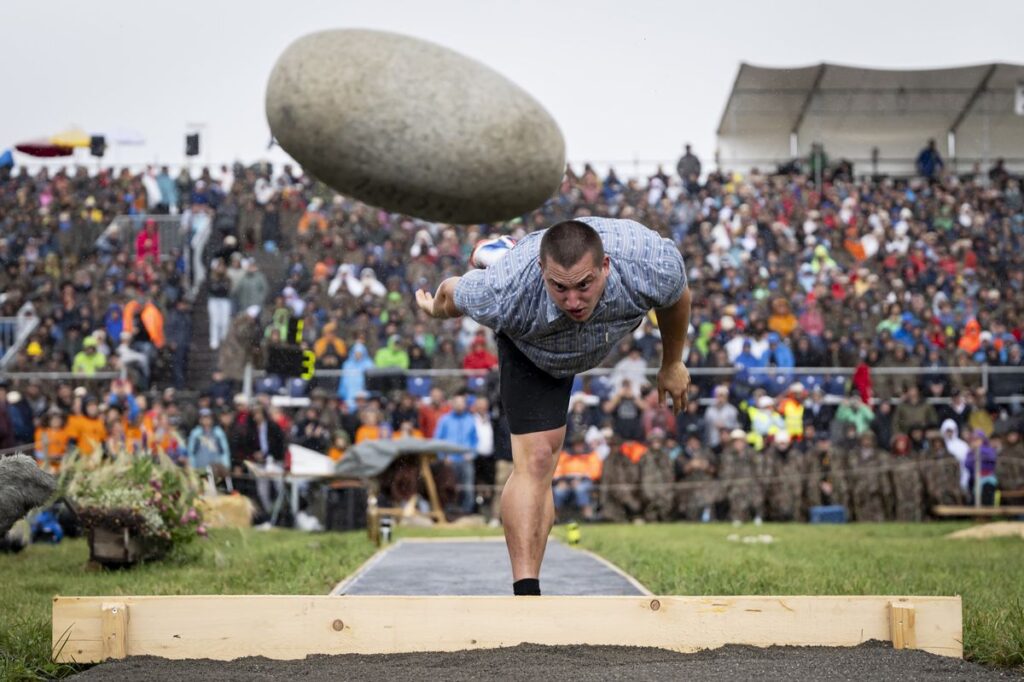
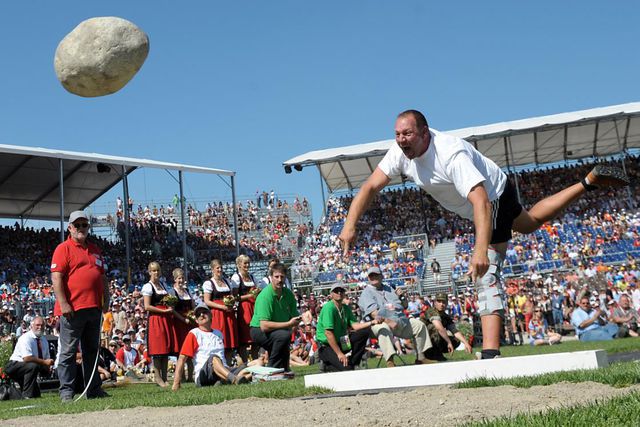
- Steinstossen: A stone put event that requires brute strength, perfect technique, and the legendary Unspunnen Stone.
- The Goal: Competitors use both hands to hurl a massive stone over their heads as far as possible down a short runway into a sand pit. It is a test of raw power, technique, and balance.
- The Stone: The main event uses the famous “Unspunnenstein” (Unspunnen Stone), which weighs a substantial 83.5 kg (184 lb). The stone is a symbol of Swiss strength and heritage and has a storied history, including being stolen twice by Jura separatists for political reasons. A replica is currently used for competitions.
- Technique: Athletes are allowed a short run-up, typically around 6.1 to 15 meters (20 to 49 feet), to build momentum before the throw. The technique generally involves lifting the stone to chest height and using an overhead motion with both hands.
Unspunnen’s Colossal Stone: Switzerland’s Unlikely Crown Jewel
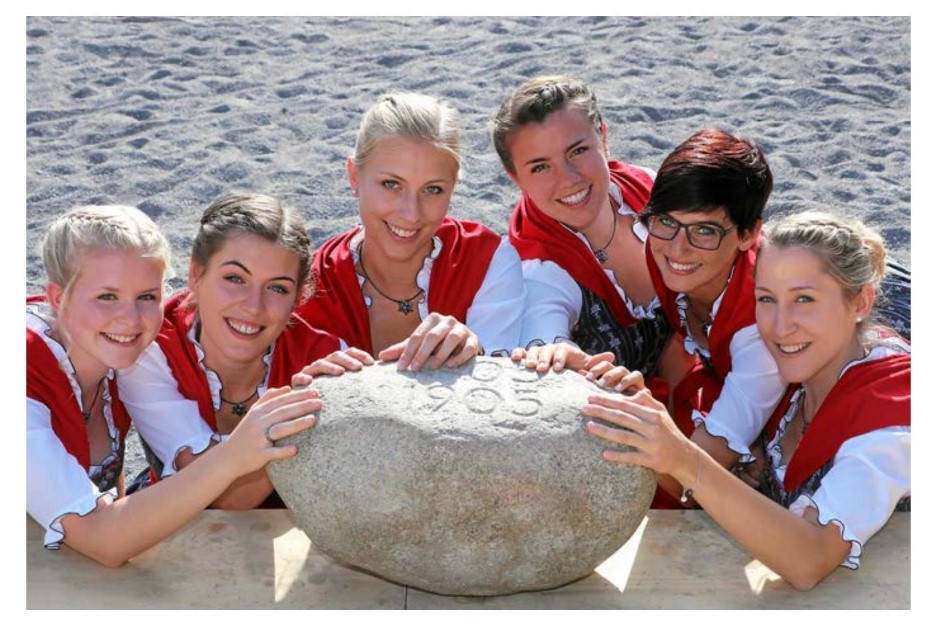
While the British have the Koh-i-Noor diamond and the French have their royal pearls, Switzerland’s most treasured “jewel” is, quite literally, a rock. But this isn’t just any rock. The Unspunnenstein is a glacial boulder weighing exactly 83.5 kilograms (184 lbs).
It is rough, unpolished, and impossibly heavy—a perfect metaphor for the rugged Alpine terrain and the stoic character of its people. Unlike delicate gemstones locked in a tower, this “jewel” is meant to be touched, lifted, and thrown. It represents the ultimate test of Swiss strength: heaving this granite beast for distance. It is the physical heart of the festival, an object so revered that it transcends its humble geological origins to become a sacred national relic. In Switzerland, value isn’t determined by sparkle, but by weight, history, and the strength required to move it.
The Swiss Mystery of the Stolen Stone
Speaking of the stone, the Unspunnenstein is perhaps Switzerland’s most famous missing person.
The original stone from 1805 was lost (or stolen) early on. A replacement from 1808 (weighing exactly 83.5kg) was used for decades until 1984, when it was brazenly stolen from a museum in Interlaken by Jura separatists (a political group seeking independence for the Jura region). It became a hostage in a political game, surfacing occasionally in mysterious photographs to prove it was still “alive.”
It was finally “returned” in 2001 at a chocolate festival, delivered in a candy crate. But there was a twist: the separatists had carved twelve stars (the EU symbol) and their emblem into the stone, altering its weight. It could no longer be used for competition.
Then, in 2005, a replica stone was stolen again from a hotel lobby, leaving a paving stone painted with the Jura coat of arms in its place. To this day, the whereabouts of the historic 1808 stone remain a mystery. The stone thrown today is a replica, but the legend of the “heavy” history remains authentic.
Unity from Unspunnen to Battlefield Soup to the Fondue Pot
The genius of Unspunnen was using a shared activity to create unity. This wasn’t a new idea in Switzerland; it finds its culinary ancestor in the Kappeler Milchsuppe (Kappel Milk Soup) the predecessor of what is now know as Swiss cheese fondue.
In 1529, during a religious war between Zurich (Protestant) and Central Switzerland (Catholic), the two armies met at Kappel not to fight, but to negotiate. While the leaders talked, the hungry foot soldiers placed a massive soup pot exactly on the border line. The Zurich soldiers provided the bread, the Catholic soldiers provided the milk, and they ate from the same bowl—spoon next to spoon. They realized that they could not kill men with whom they had just broken bread.
This spirit of the “unification meal” is the direct ancestor of Fondue. In the 1930s, the Swiss Cheese Union (notoriously known as the Swiss cheese mafia) promoted fondue as a national dish to create a sense of unity (and sell more cheese!) during the turbulent pre-war years. Just like the Unspunnen festival brought city and country together in 1805, and the Milk Soup brought enemies together in 1529, the caquelon (fondue pot) forces us to slow down, share from a single vessel, and bond.
When you dip your fork into the cheese here in Interlaken, you aren’t just eating dinner; you are participating in a centuries-old ritual of Swiss peace-making.
Experience the Unspunnen Legend
The Unspunnen ruins are open year-round and offer a mystical view over the Bödeli (the land between the lakes) and the Jungfrau massif. It’s a short, magical walk from Wilderswil or Interlaken West.
Want to dive deeper into these stories? We are currently developing a specialized “Legends of Interlaken” Tour that will take you to the ruins, explain the physics of stone throwing, and end with a unification meal of your own. Stay tuned as the launch date will be Spring 2026.
Until then, grab a piece of cheese, look up at the castle, and ask yourself: If you had an 83kg stone, where would you hide it?
UNSPUNNEN
The Heavy Stone, The Ruined Castle, & The Pot of Cheese
Welcome to the story of the “Woodstock of the Alps.” In 1805, a festival was born to heal a fractured nation. Today, it stands as a legend of an unsolved crime involving an 83.5kg stone and the spiritual ancestor of your cheese fondue dinner.
Switzerland’s Heavy Crown Jewel
While other nations treasure diamonds, Switzerland treasures a rock. The Unspunnenstein is a glacial boulder weighing exactly 83.5 kilograms. It is rough, unpolished, and the ultimate test of strength.
To understand why this stone is a “Jewel,” you must understand its sheer density. It isn’t just a rock; it’s a challenge that defies the average person.
Weight Comparison (kg)
The Woodstock of the Alps
Just as Woodstock defined a generation in the USA, Unspunnen defined the Swiss soul. Born in 1805 to reconcile the urban elite of Bern with the rural farmers of the Oberland, it was a radical act of unity. Today, over 100,000 visitors gather for a spectacle of folklore.
Cultural Composition of the Festival
The Mystery of the Missing Stone
The Unspunnen stone is Switzerland’s most famous missing person. It has been stolen, returned, vandalized, and stolen again.
1805 & 1808
The original stone is lost. A replica (83.5kg) is found in 1808 and used for 176 years.
1984: The Heist
Stolen from a museum by Jura separatists as a political hostage. It remains missing for 17 years.
2001: The “Return”
Returned in a candy crate at a chocolate ball. However, it was carved with 12 stars (EU symbol), ruining its weight (81.4kg).
2005: Gone Again
The stone was stolen again from a hotel lobby. A paving stone painted with a coat of arms was left in its place. It remains missing.
From Battlefield Soup to Fondue Pot
The spirit of Unspunnen—unity through shared experience—has a culinary ancestor: the Kappeler Milchsuppe of 1529. Soldiers from opposing armies placed a soup pot on the border line, sharing bread and milk instead of fighting.
This evolved into Fondue. Promoted by the Swiss Cheese Union in the 1930s, the caquelon (pot) forces us to slow down, share from a single vessel, and bond. When you dip your fork in Interlaken, you are participating in a centuries-old peace ritual.
Interactive Legends (Powered by Gemini AI)
🏰 Ask the Stone Historian
Curious about the theft, the castle, or the weight? Ask our AI expert.
🧀 The Fondue Toastmaster
Need a speech for your next fondue party? Enter an occasion!
Experience the Legend Yourself
The ruins are real. The mystery is unsolved. The cheese is hot. Join our upcoming “Legends of Interlaken” Tour to lift a stone, walk the ruins, and share the unification meal.