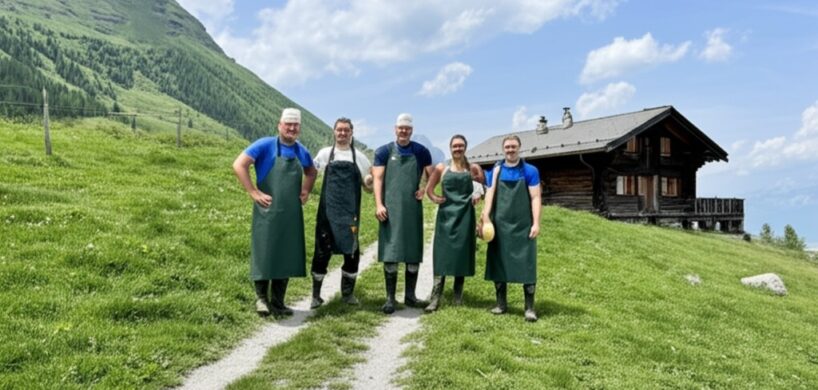
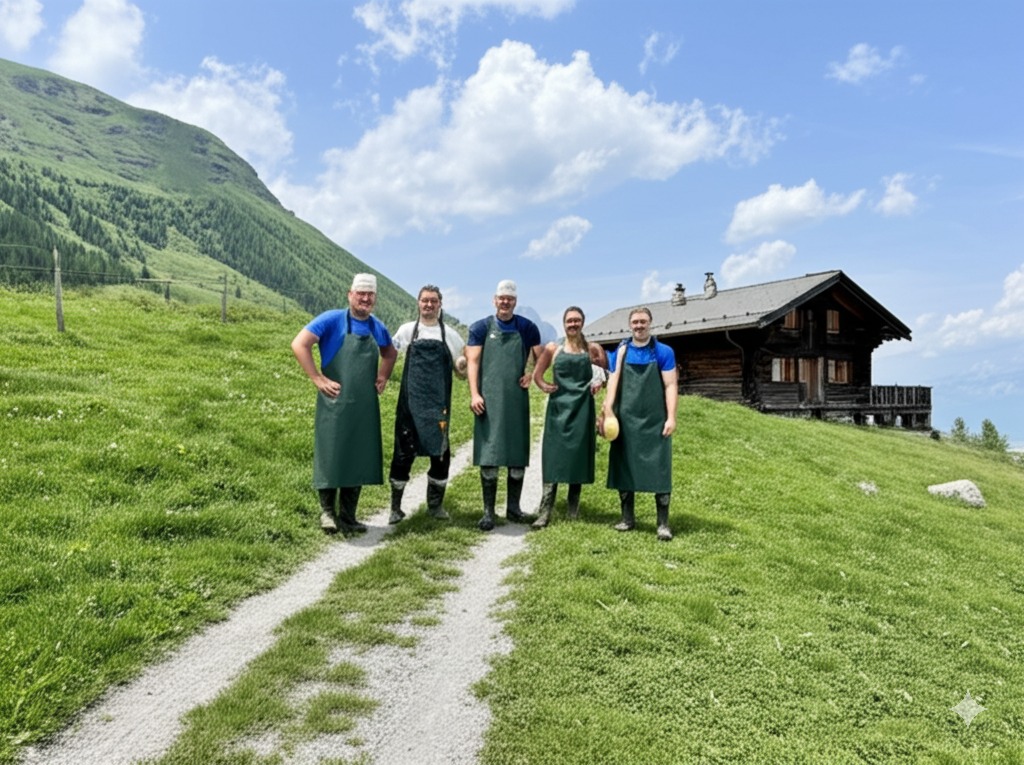
Welcome to our small-scale dairy high up in the Swiss Alps! Here, amidst the crisp mountain air and lush pastures, we carry on the age-old tradition of making Alpkäse, a cheese whose flavor is deeply connected to the alpine environment and only made in summer on the high Alpine pastures. The milk from our cows, grazing on a diverse array of mountain grasses and herbs, gives our Alpkäse its unique and complex character. The cheesemaking process is a labor of love, passed down through generations, and it’s a privilege to share it with you. It is exactly this cheesemaking process that you can experience yourself during our unique and engaging cheesefarm vist & cheesemaking workshop.
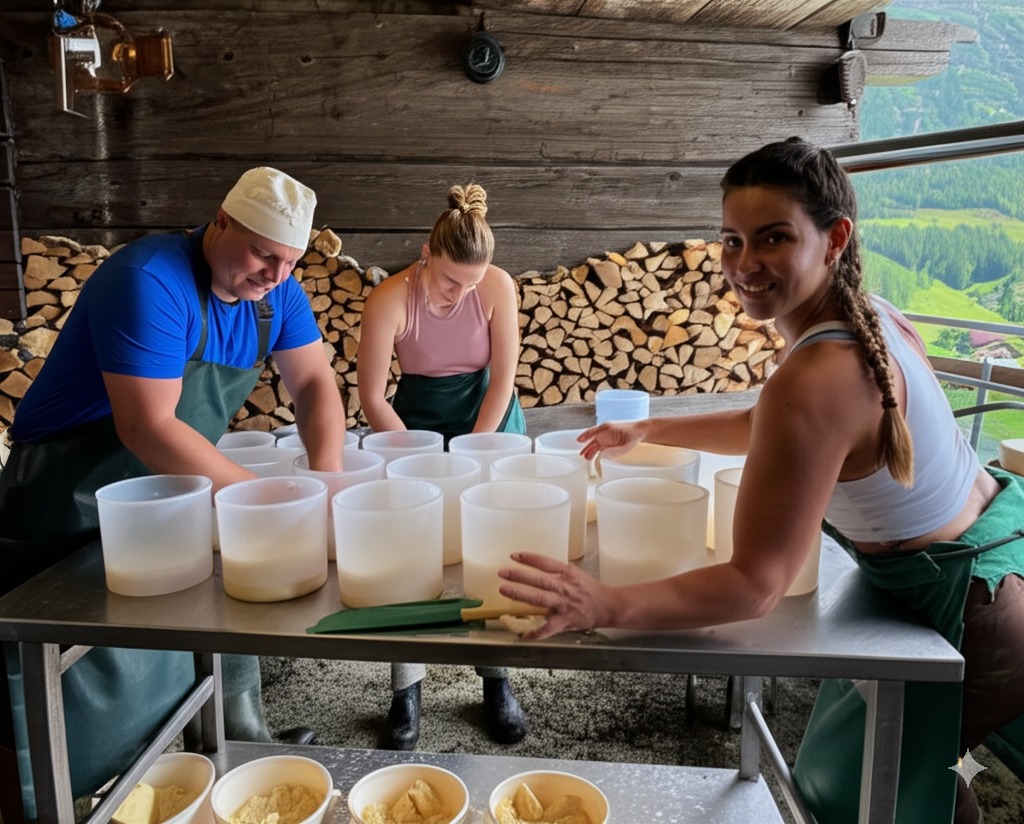
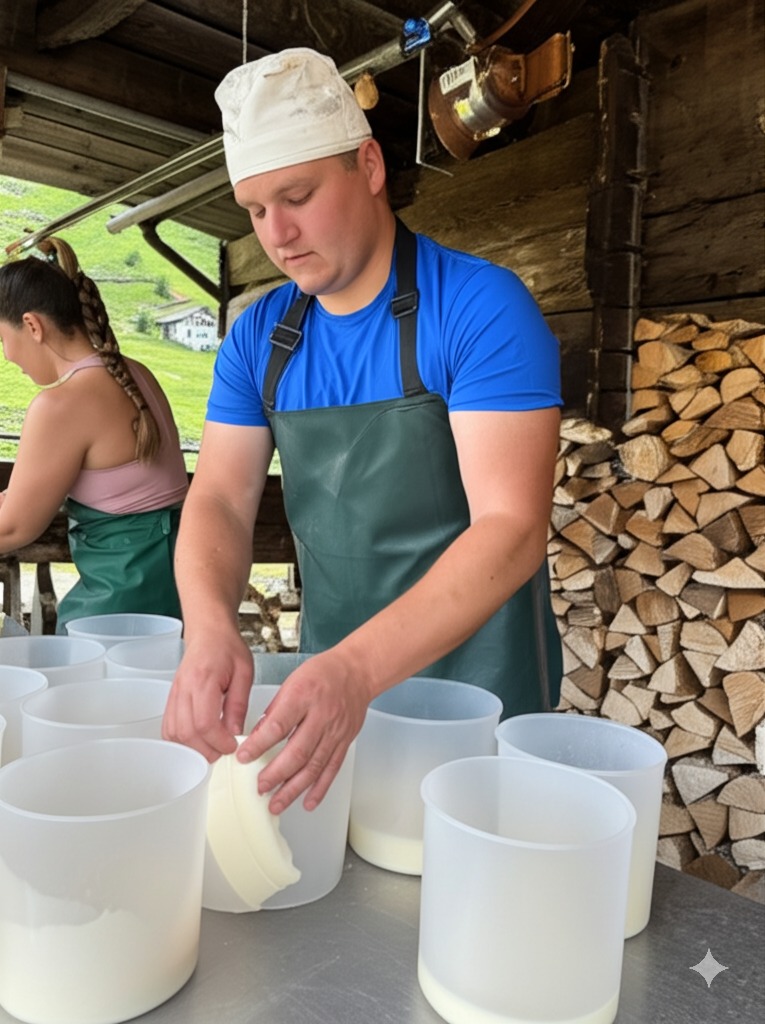
The Morning Milking and Bringing the Milk to the “Kessi”
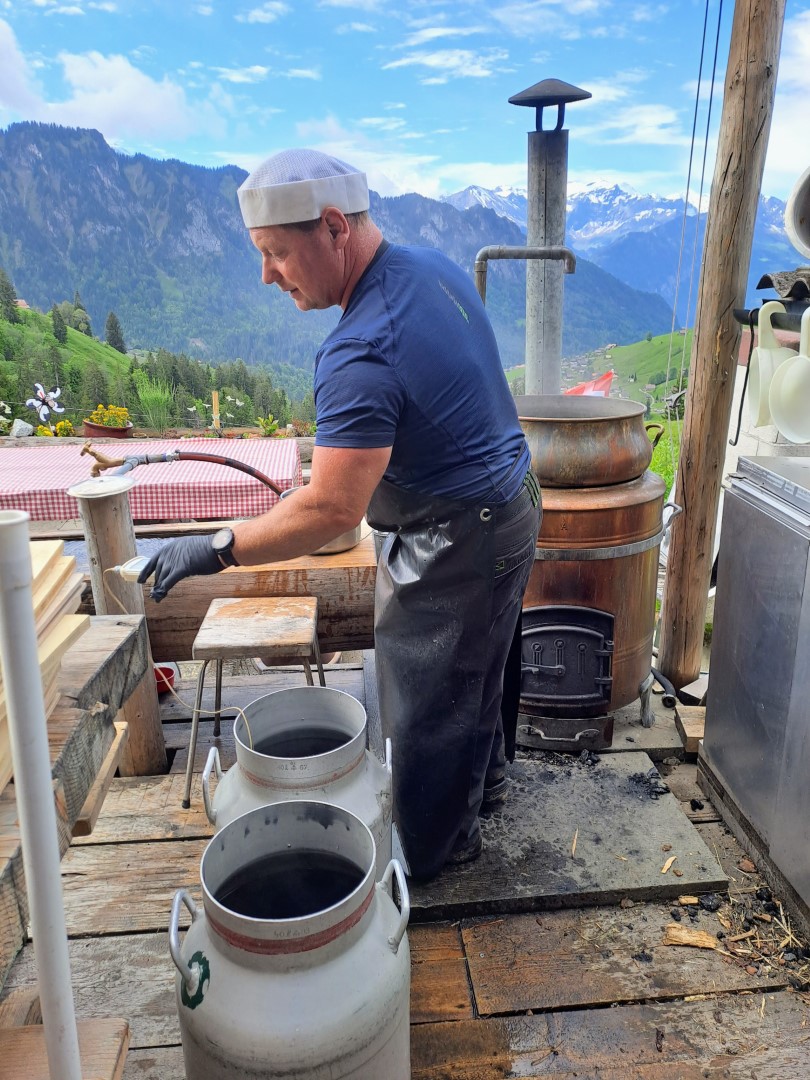
Our day begins before sunrise, ensuring the freshest milk for our cheese. The cows are milked, and the raw, unpasteurized milk is immediately transported to our traditional copper kettle, the “Kessi.” The Kessi is crucial as its shape and copper material help with even heating and the development of flavor.
Heating the Milk and Adding the “Lab”
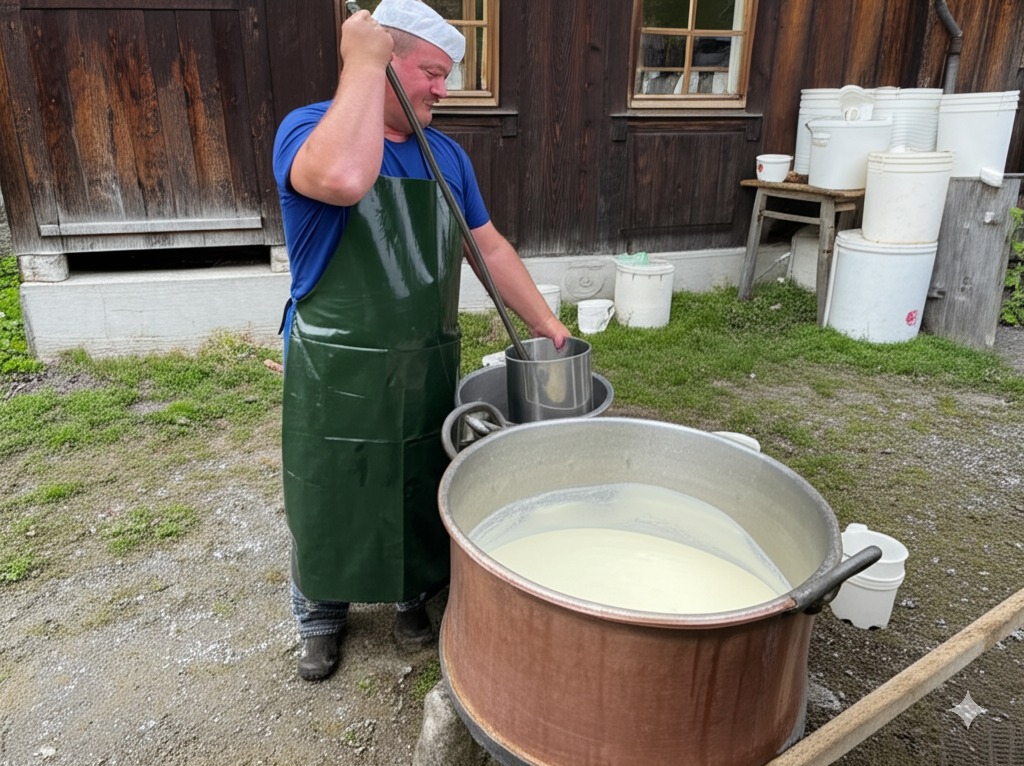
Once the fresh milk is in the Kessi, we gently heat it over an open fire or a controlled heat source, stirring continuously with a large wooden paddle called a “Rührbesen.” The temperature is crucial and varies slightly depending on the day and the milk. When the milk reaches the desired temperature, we add rennet, traditionally called “Lab,” which helps the milk coagulate and form a curd. This is a critical step that requires precision and experience.more_vert
Cutting the Curd
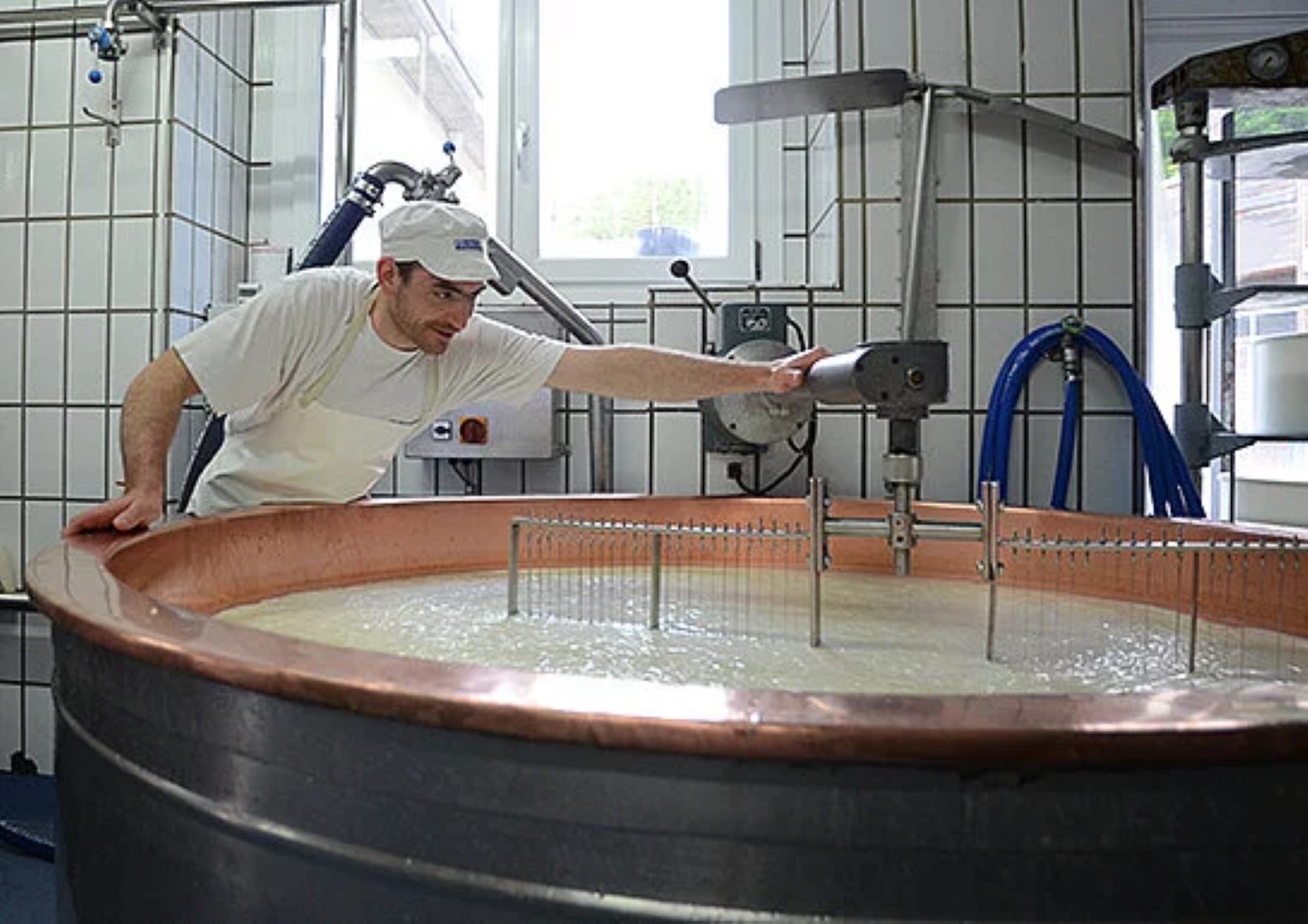
After the milk has coagulated into a firm mass, it’s time to cut the curd. We use specialized tools, often wire harps or long knives, to carefully cut the curd into small grains. The size of the curd determines the moisture content of the final cheese. For Alpkäse, we aim for relatively small curd grains. This process releases the whey, the watery part of the milk.
Separating the Curd and Whey
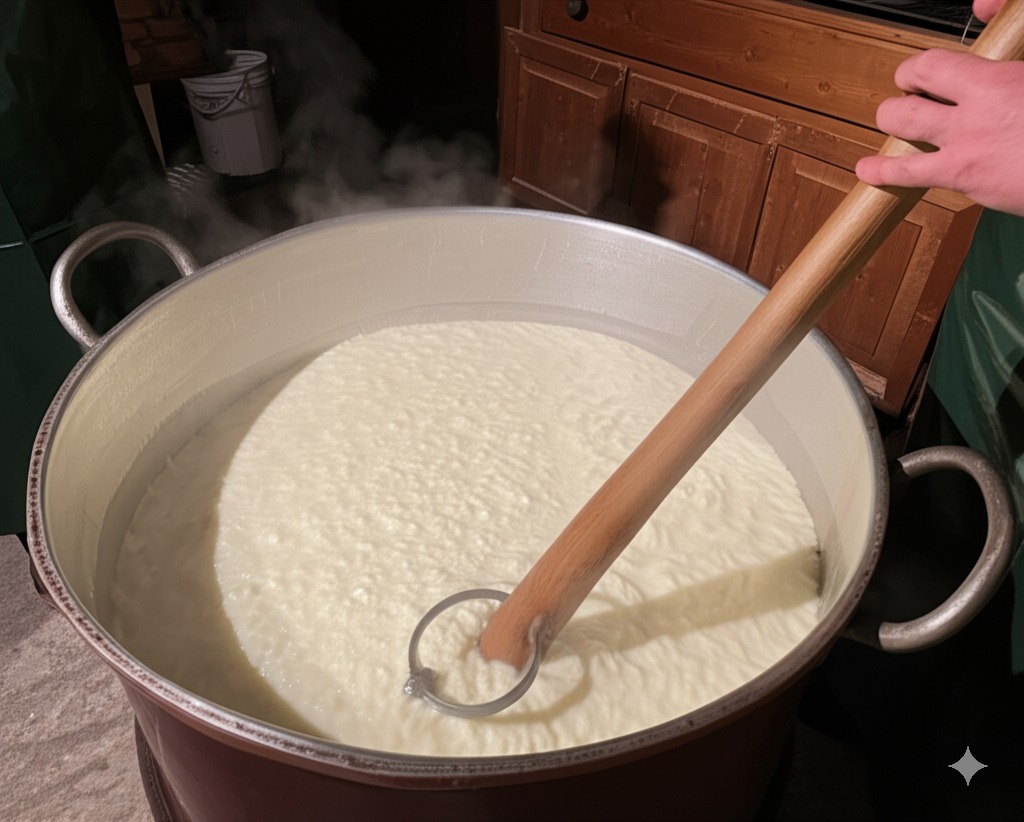
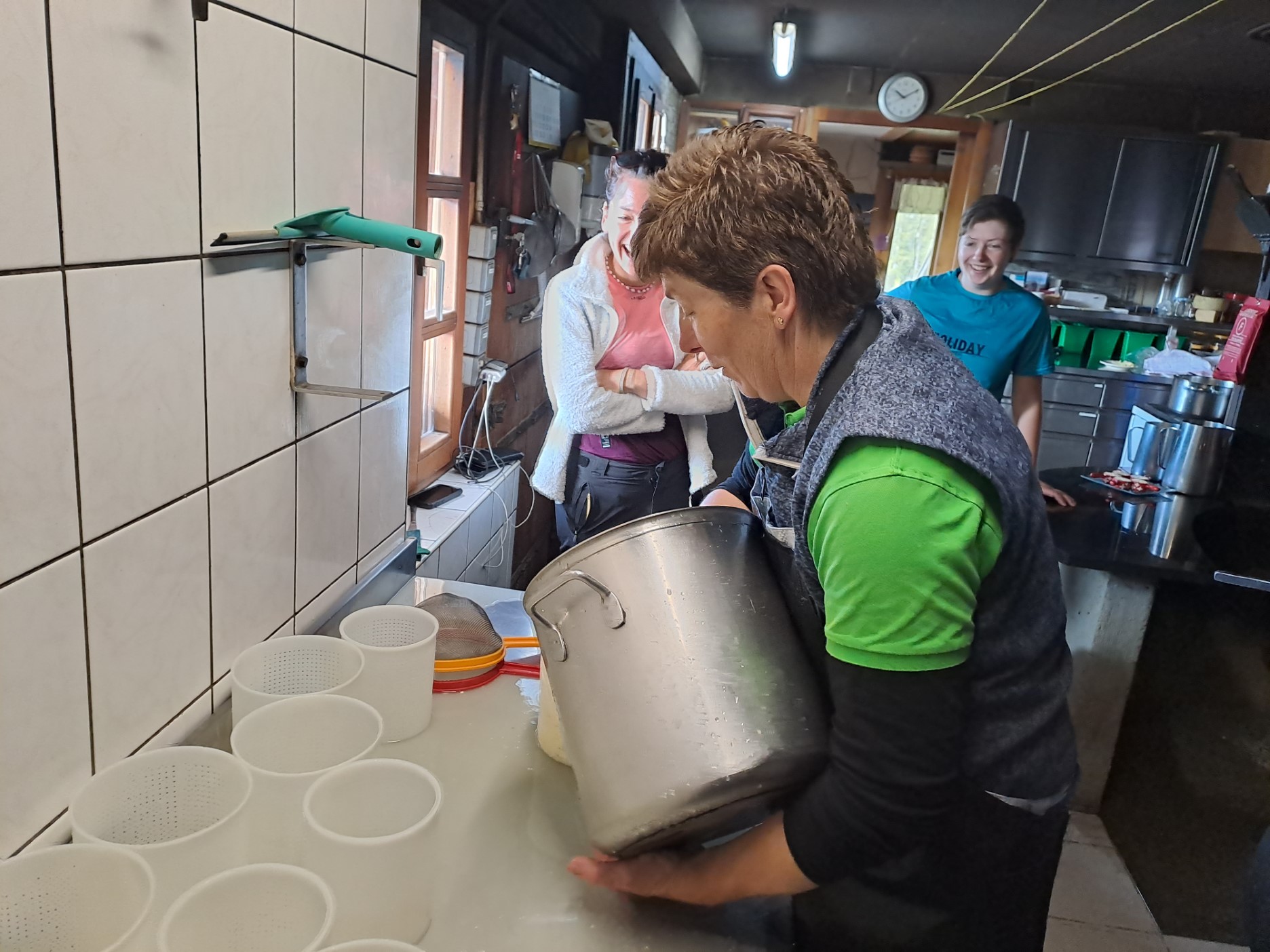
After the curd has reached the desired firmness, we stop heating and allow it to settle at the bottom of the Kessi. We then carefully separate the whey from the curd. The whey is often used for feeding our animals.
Brine Bath
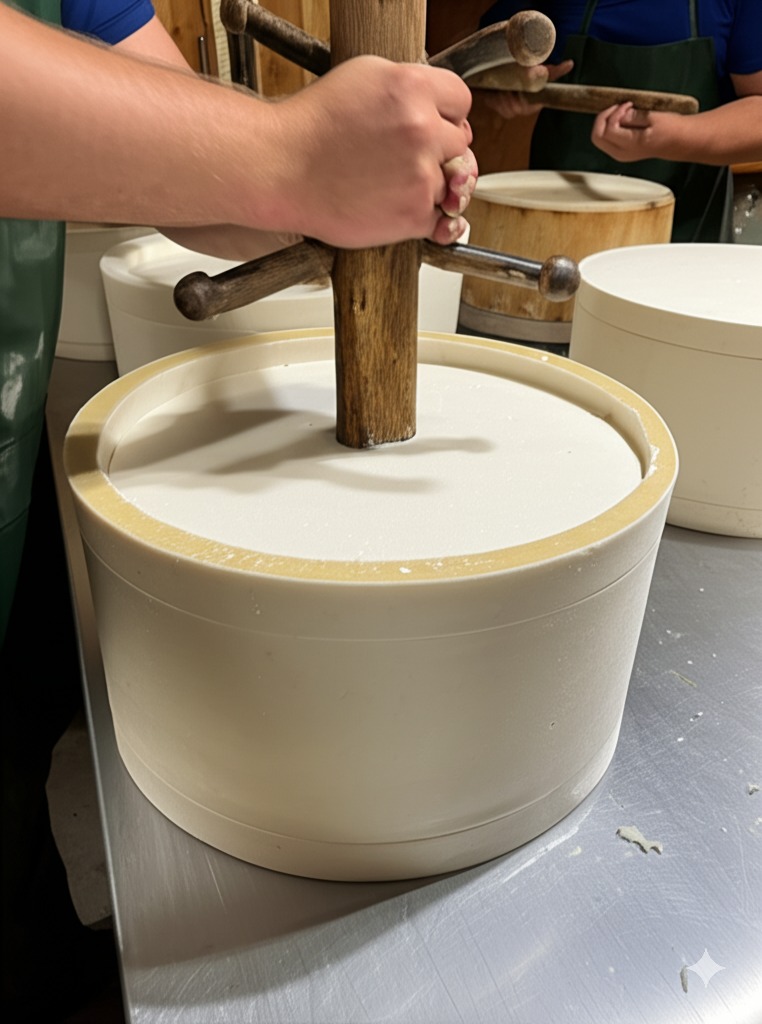
After pressing, the young cheese wheels are immersed in a brine bath for a specific period. The salt not only adds flavor but also helps to preserve the cheese and form its rind. The concentration and duration of the brining are carefully controlled.
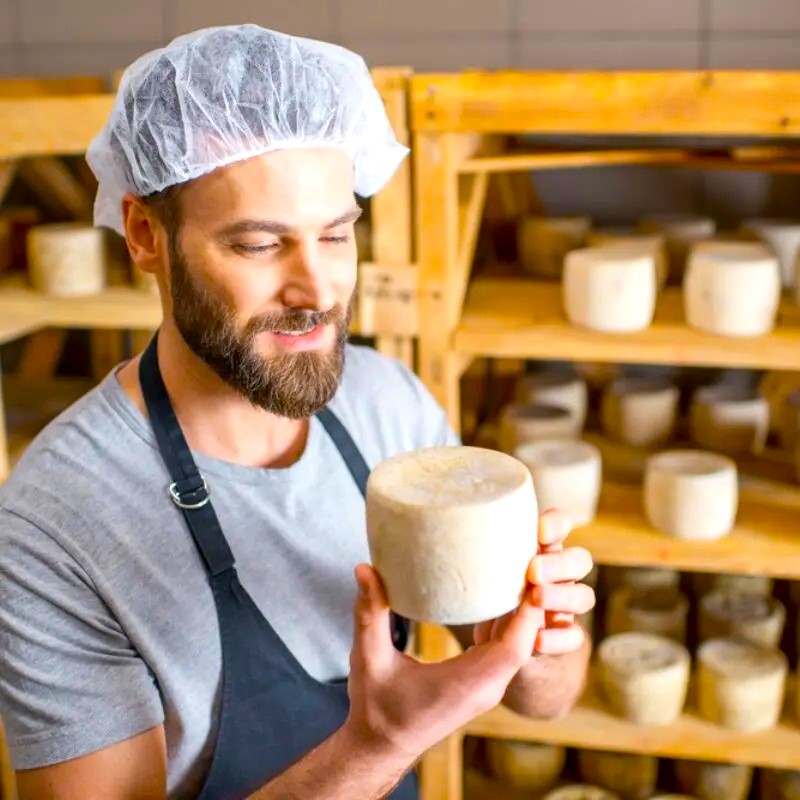
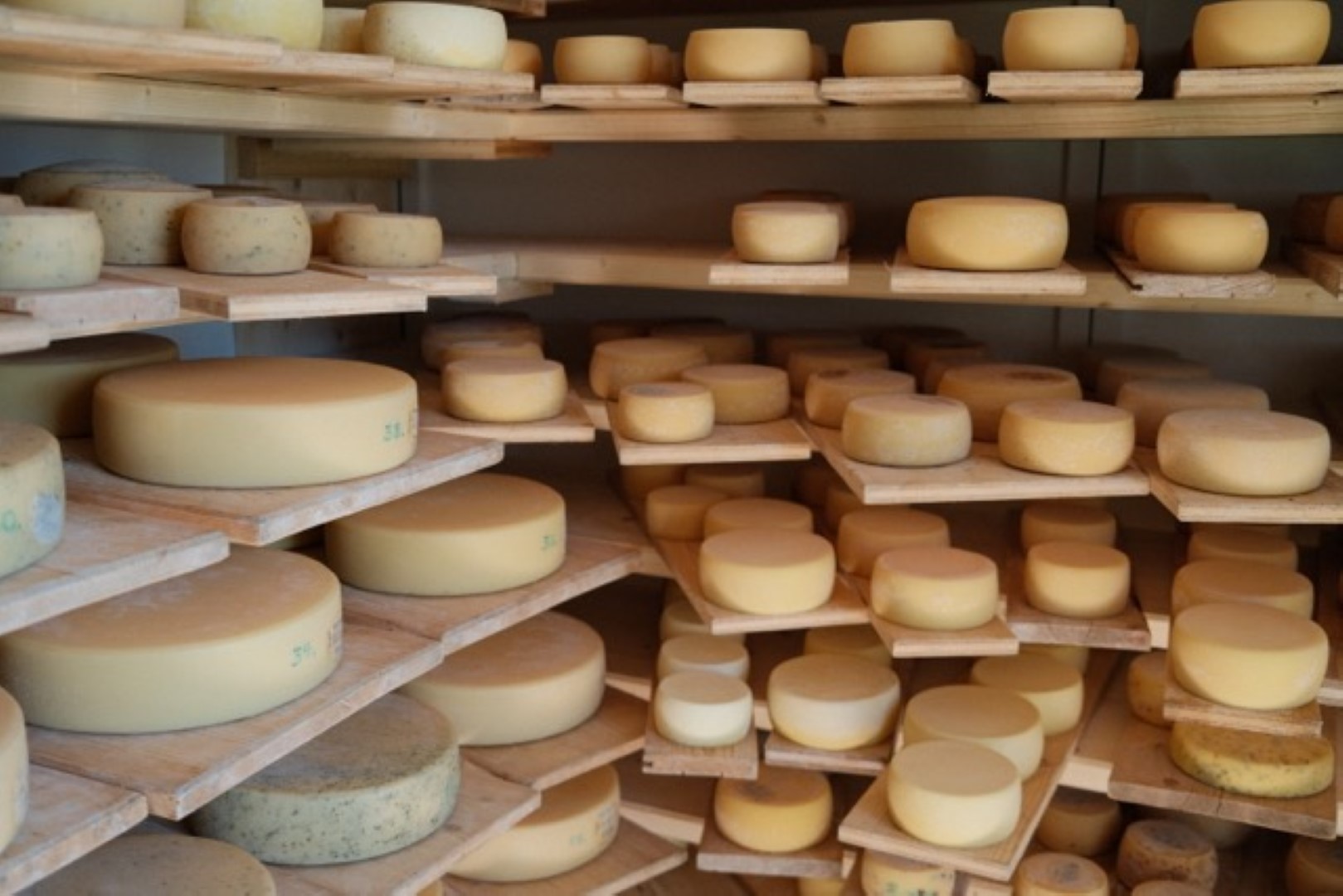
The Stunning Alpine Landscape creates stunning flavous
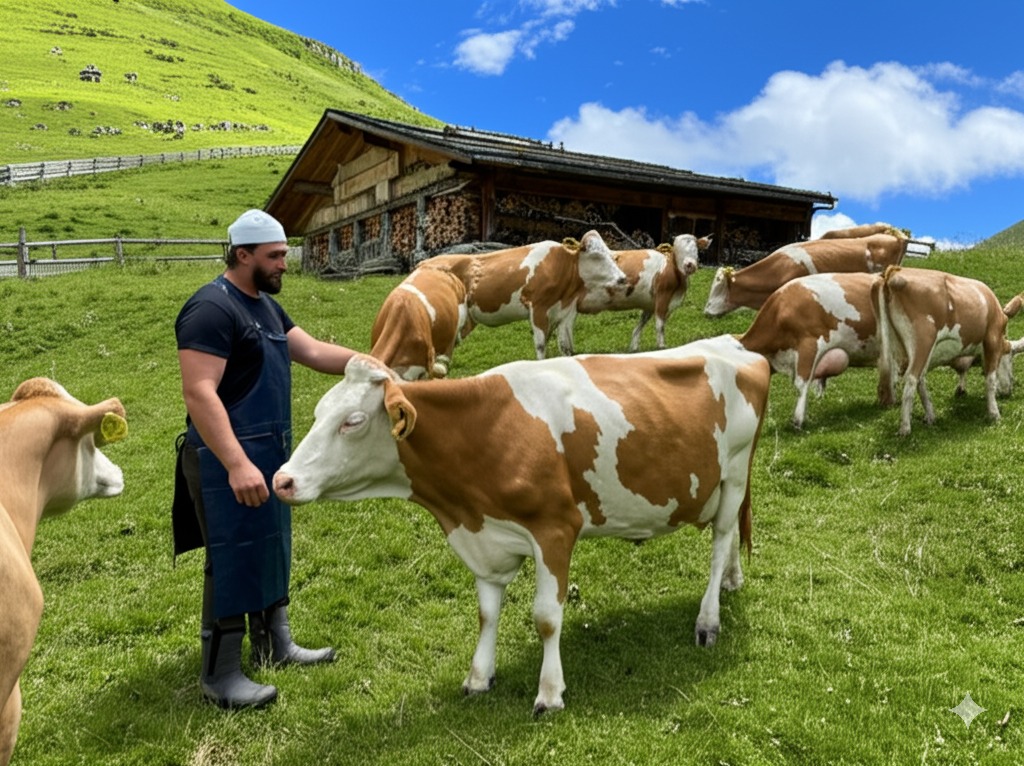
The breathtaking scenery surrounding our farm is not just a beautiful backdrop; it’s an essential part of what makes our Alpkäse so special. The altitude, the climate, and the unique flora of this region all contribute to the milk’s quality and the cheese’s distinct terroir.
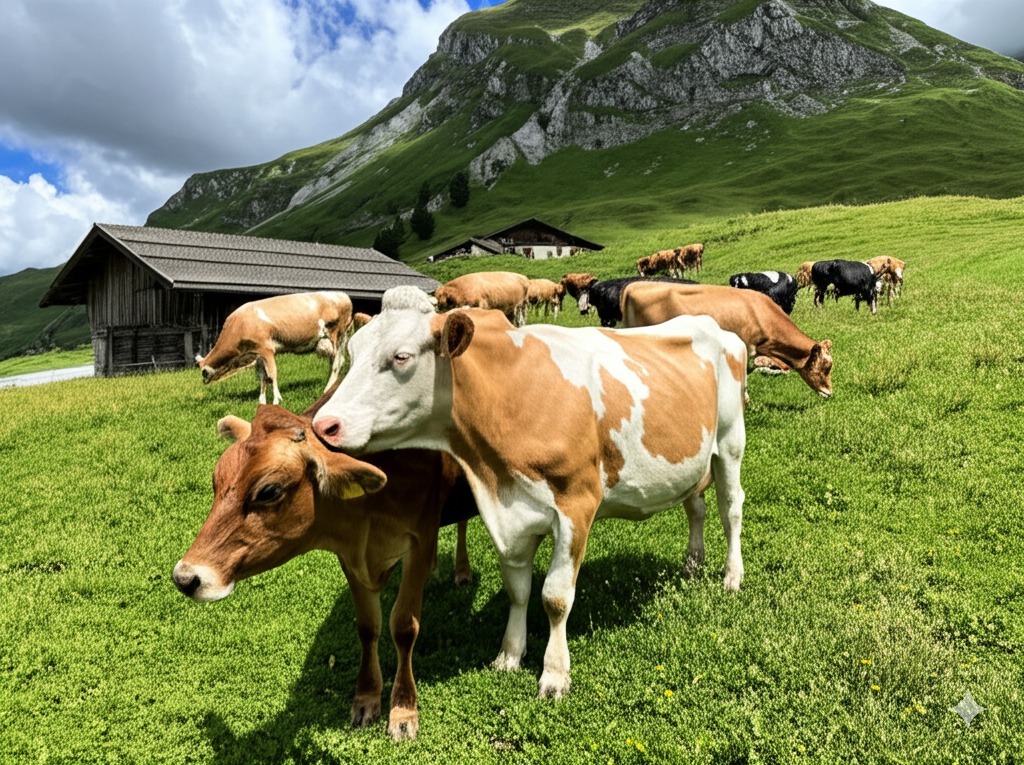
Enjoying the Taste of the Alps
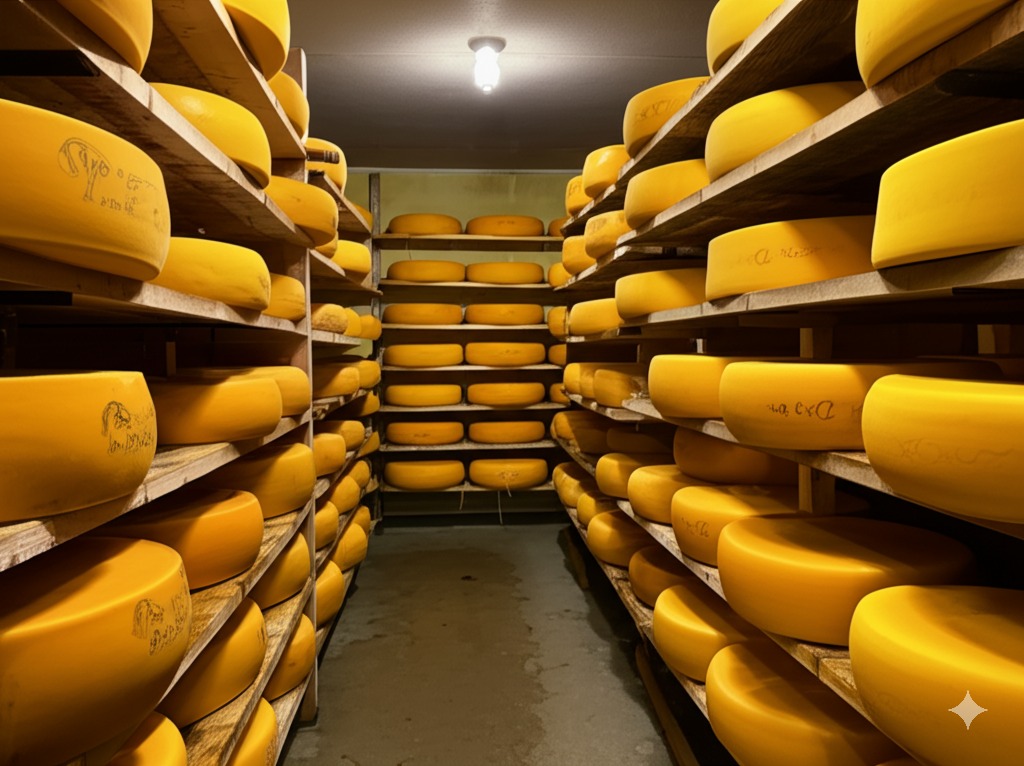
Finally, after months of careful nurturing, our Alpkäse is ready to be enjoyed. Each wheel tells a story of our mountains, our cows, and our dedication to this traditional craft. The taste is rich, nutty, and often carries subtle hints of the alpine herbs the cows have grazed upon. It’s a true taste of the Swiss Alps.
Making Alpkäse is more than just a process; it’s a way of life. We are deeply connected to our land and our animals, and we take pride in producing a cheese that reflects the unique terroir of our alpine home. We hope you can one day visit us and experience the magic of Alpkäse making firsthand!
Make your own Alpine Cheese
To make your own Alpine Cheese at a local Swiss Alpkäse farm in the mountain above Interlaken sign up for our cheesy cheesefarm visit & cheesemaking workshop. On top of learning hands-on how to make your own Alpine cheese you will get to enjoy an overly delicious Alpine farmers breakfast, enjoy stunning scenery and get to take a cheesy whey bath (or just your feet if you like). For more info and bookings have a look by clicking here.