If you ask anyone to name a Swiss hero, one name almost always hits the mark: Wilhelm Tell. He is the man who stood up to tyranny with a crossbow in his hands and an apple on his son’s head. But did you know that while Tell’s story was born in the canton of Uri, his spirit is perhaps most alive today in the Bernese Oberland—specifically in Interlaken?
Whether you are a history buff, a theatre lover, or just someone looking for the ultimate Swiss experience, here is why you need to know about the man in the hooded shirt—and where to find him.
Wilhelm Tell: The Man, The Myth, The Legend
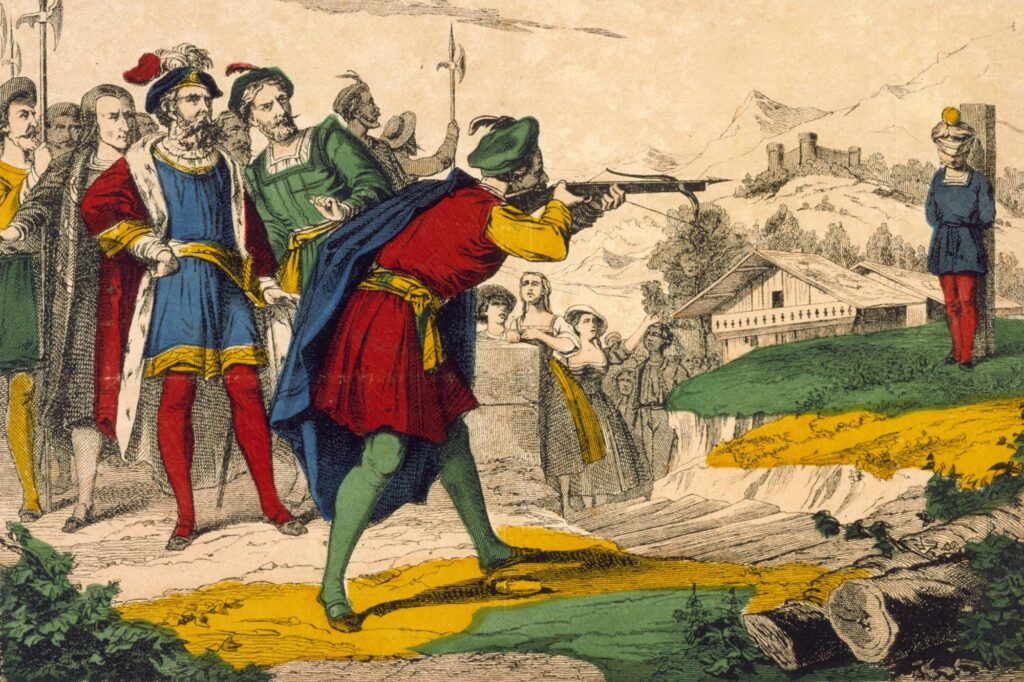
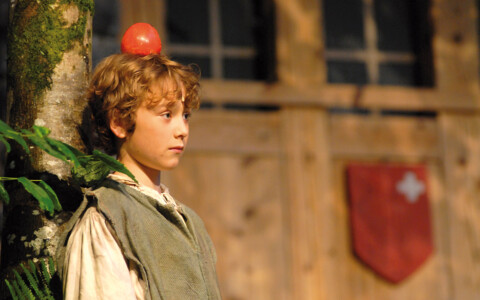
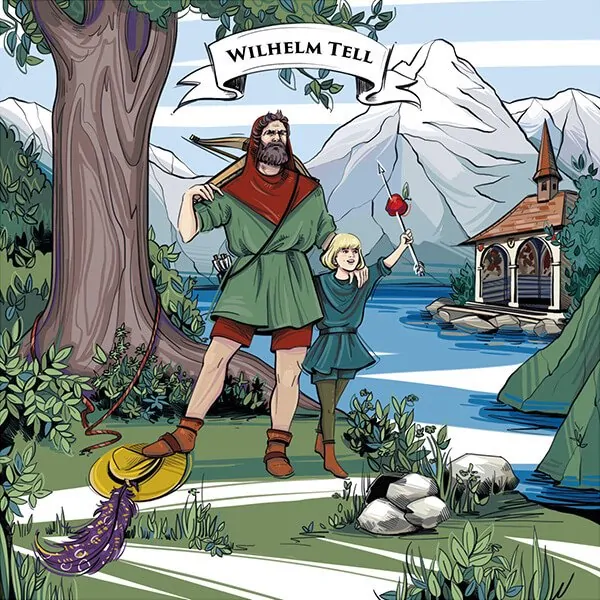
According to legend (and Friedrich Schiller’s famous 1804 play), Wilhelm Tell was a 14th-century peasant in central Switzerland. When he refused to bow to the hat of the Austrian bailiff Gessler (placed on a pole to assert authority), he was forced into a cruel ultimatum: shoot an apple off his son’s head or face execution.
Tell made the shot but ended up in prison nonetheless as Gessler broke his promise to set him free if he could hit the apple. Wilhelm Tell later assassinated Gessler in the Hohle Gasse, sparking the rebellion that led to the Rütli Oath and the eventual founding of the Swiss Confederacy.
Was he real? Historians say… probably not. There is no concrete evidence Tell existed, and similar “apple-shot” legends appear in Norse and Danish folklore. However, to the Swiss, his spirit is undeniably real. He represents independence, defiance, and the love of freedom.
The Tell-Freilichtspiele: History Comes Alive in Interlaken’s openair Theatre
While Altdorf (Uri) is the setting of the original Wilhelm Tell story, Interlaken is the home of the spectacle honouring the real Swiss hero.
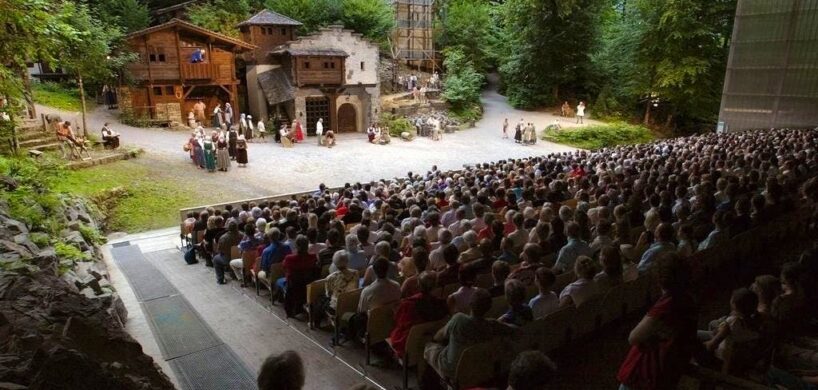
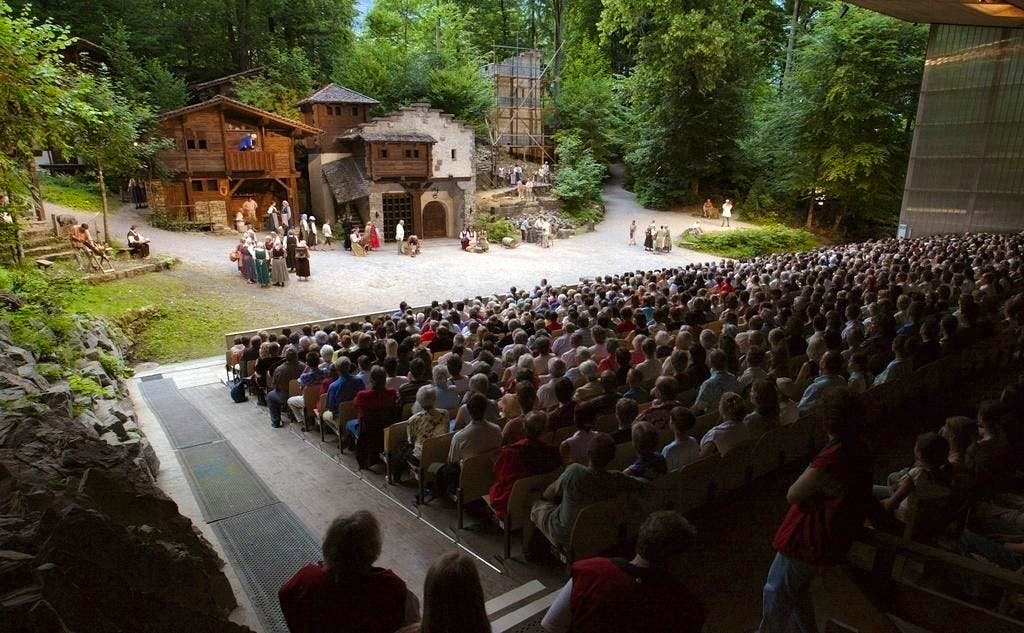
Since 1912, the village of Matten bei Interlaken has hosted the Tell-Freilichtspiele (Tell Open-Air Games). This isn’t just a play; it is a massive community undertaking that has become a cultural institution.
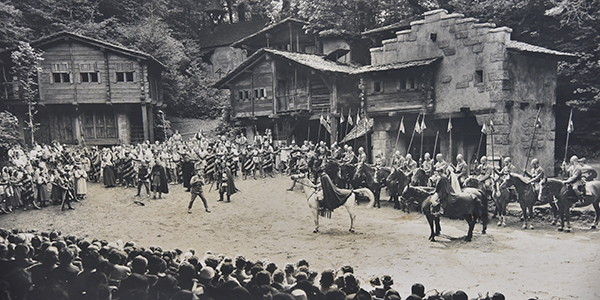
Here is what makes this theatre production completely unique and a must visit on a trip to Interlaken:
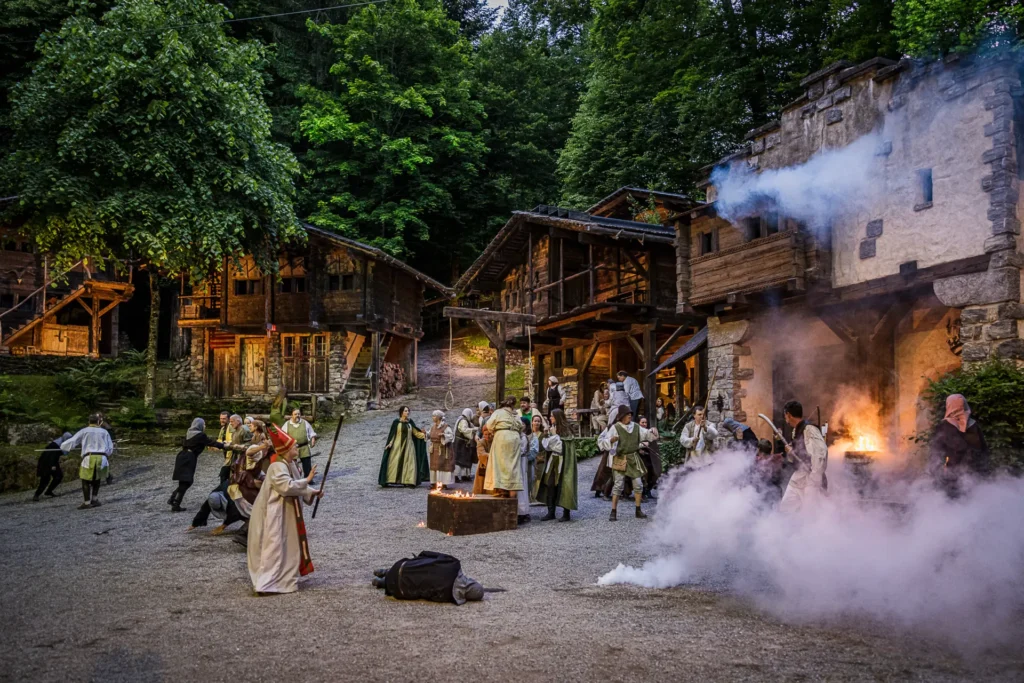
- The “Natural” Stage: The theatre is an open-air arena nestled in the Rugen woods with a capacity of over 1500 seats. The stage isn’t a painted backdrop—it’s a living, breathing village reconstructed to look like the 1300s, complete with genuine chalets and rocky paths.
- The Cast: The play features over 130 amateur actors from the region. For many local families, acting in the Tellspiele is a rite of passage passed down through generations.
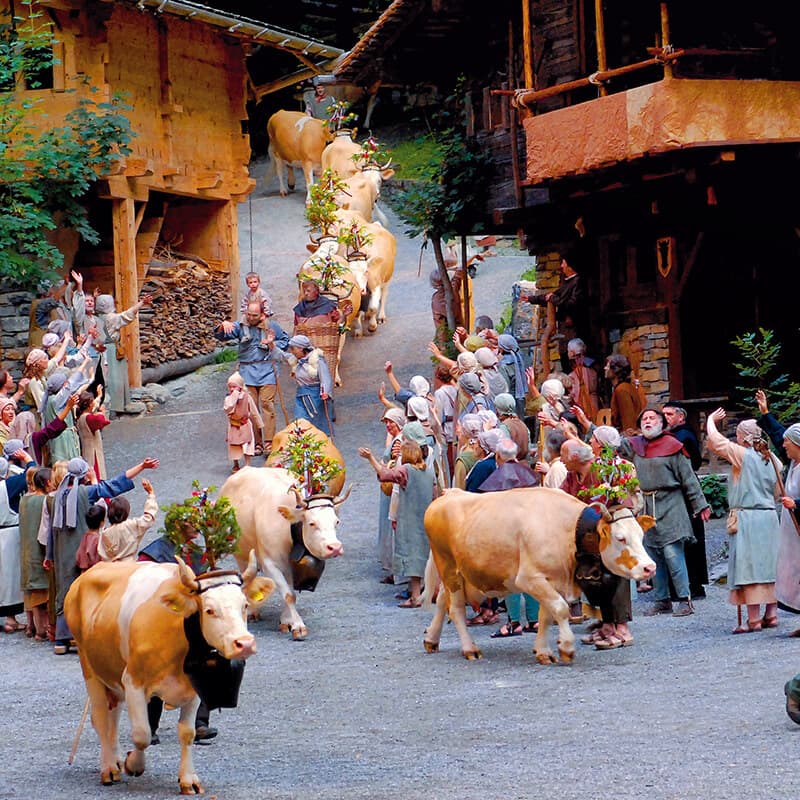
- The “Real” Cast (Animals): This is the highlight for many. The production is famous for its authenticity. When the herdsmen descend from the mountains in the play, they don’t just walk; they bring real cows (with heavy bells), goats, and galloping horses onto the stage. The thundering hooves and the smell of the campfire smoke make you feel like you’ve actually stepped back into medieval Switzerland.
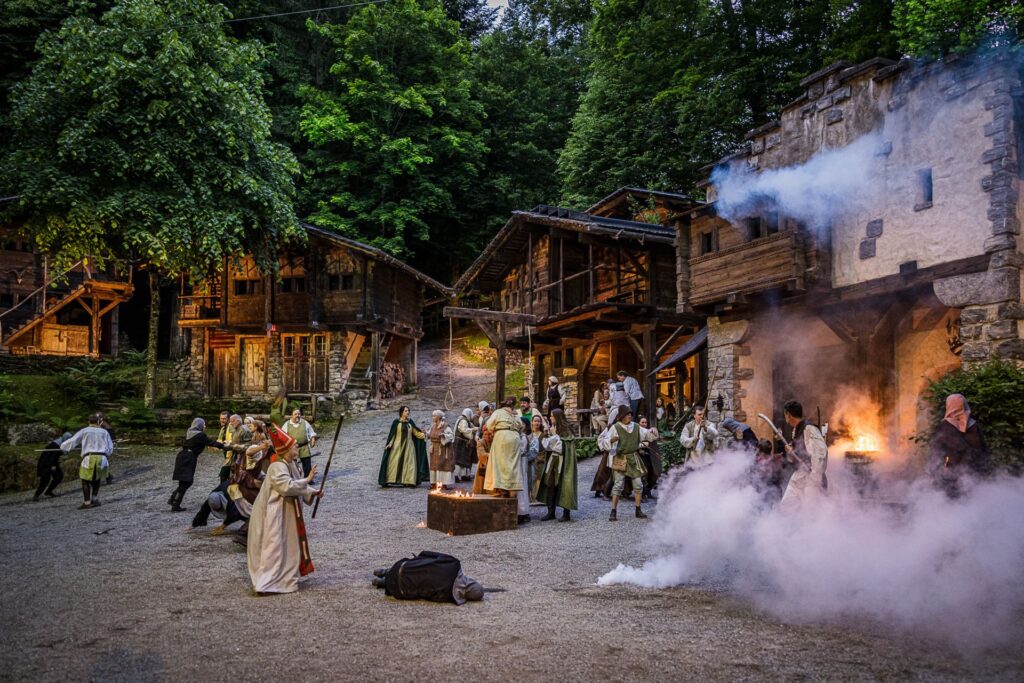
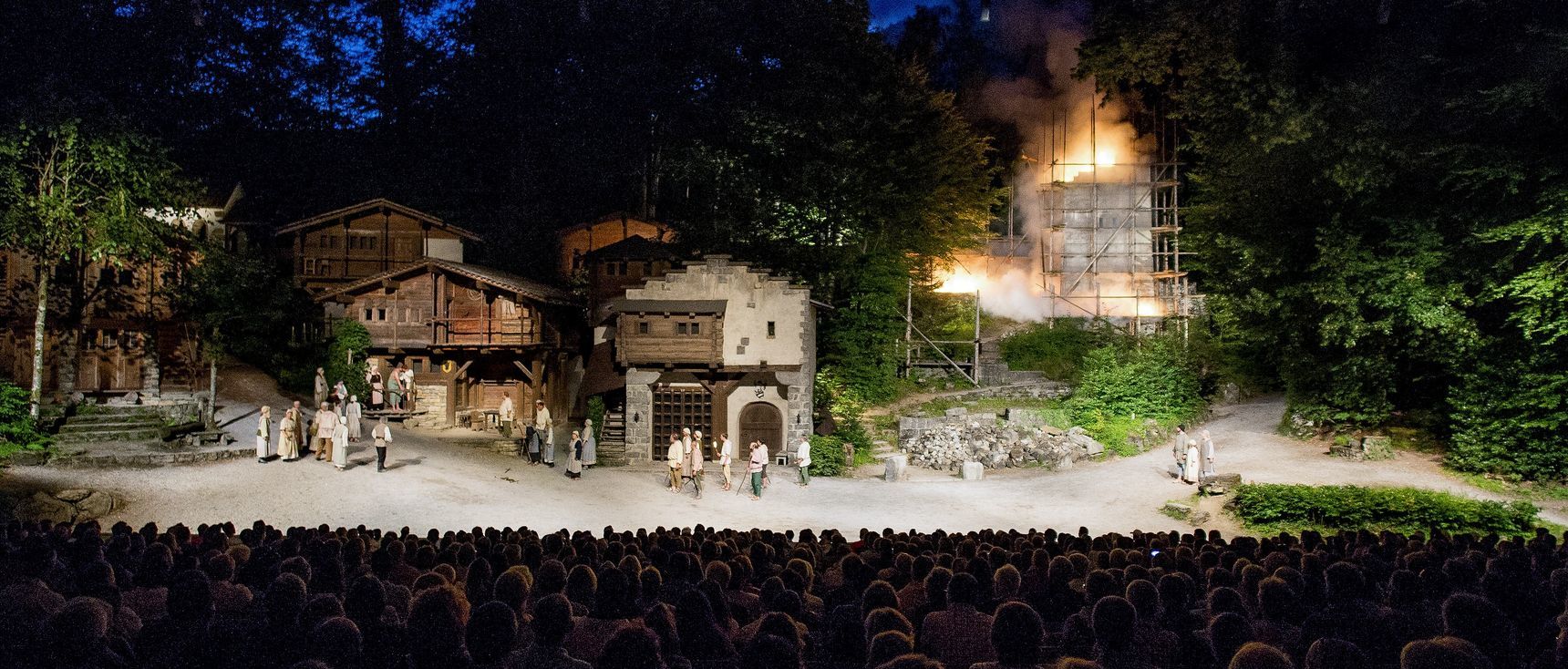
Insider Tip: The play is performed in German, but don’t let that stop you. The visual storytelling is so powerful (and the plot so famous) that you will understand exactly what is happening. Plus, the sheer scale of the “Rütli Oath” scene under the night sky is goosebump-inducing regardless of language.
The Fondue Connection: A Cheesy Bridge to the Past
We at the fondue villa wondered and asked the golden cheesy question: Did Wilhelm Tell eat Fondue?
The historical answer is: Unlikely. Modern cheese fondue, as we know it (melted cheese and wine in a communal pot), didn’t appear in cookbooks until the late 17th or 18th century—long after Tell’s time. In 1307, Tell likely ate a simpler diet of dried meat, bread, but most likely also roasted or plain cheese as this was becoming a staple of the time.
However, the cultural connection between Wilhelm Tell and Swiss cheese fondue is undeniable. Both Wilhelm Tell and Fondue are the twin pillars of “Swissness.” They represent the rustic, communal, and mountain-hardy soul of the country and are true icons of this Alpine nation cherished by the population.
So for the perfect iconic Swiss pairing this upcoming summer your evening program is a cheese fondue at the fondue villa followed by a mesmerizing Wilhelm Tell openair theater evening. Hot cheese for the stomach, and a fight for freedom for the soul.
How to Experience the Tell Spiele
If you want to witness the legend yourself, here is what you need to know:
- When: The Tell-Freilichtspiele season usually runs from July to September. Find all dates and times directly here.
- Where: The open-air theatre in Matten bei Interlaken (about a 15-minute walk from the Interlaken West train station).
- And the fondue villa & garden in Interlaken. come for a 5-7pm fondue experience and you will be well on time for the 8pm Tell play. Reservations directly here.
- Tickets: It is highly recommended to book in advance, especially for weekend shows.
- Attire: Even in summer, evenings in the open-air theatre can get chilly. Bring a jacket or a blanket!