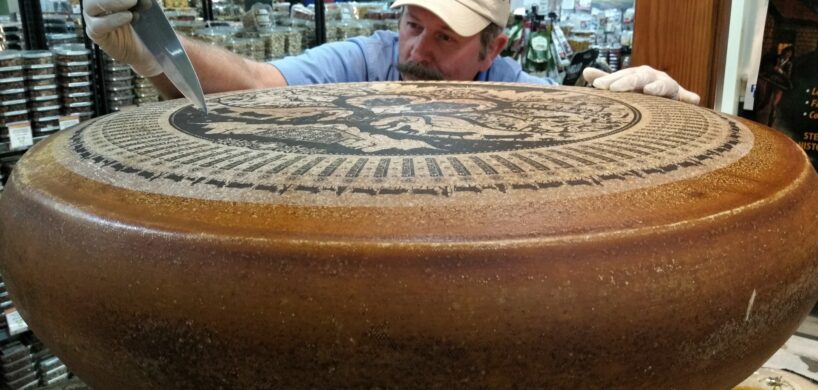
When it comes to cheese, few varieties can claim the title of being the biggest in the world. Emmentaler cheese, with its enormous wheels and rich history, stands out not only for its size but also for its unique flavor and cultural significance. This Swiss cheese has earned its place as the “king of all cheeses,” captivating cheese lovers around the globe as it officially the world’s largest cheese and a big part of the Swiss fondue culture!

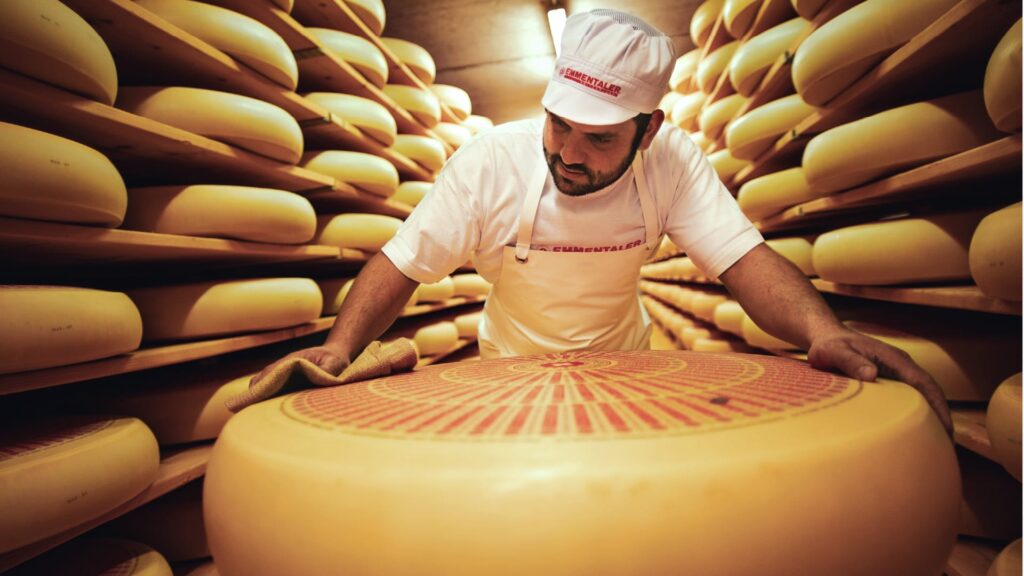
The World’s Largest Cheese
Emmentaler truly deserves the title of the world’s largest cheese due to its extraordinary physical dimensions and production characteristics. These massive wheels typically measure 80 to 100 cm in diameter and weigh between 75 to 120 kg (up to 265 pounds). The colossal size has fascinating historical roots: in the 19th century, dairy farmers were taxed according to wheel count rather than total weight, which incentivized creating larger cheese wheels.
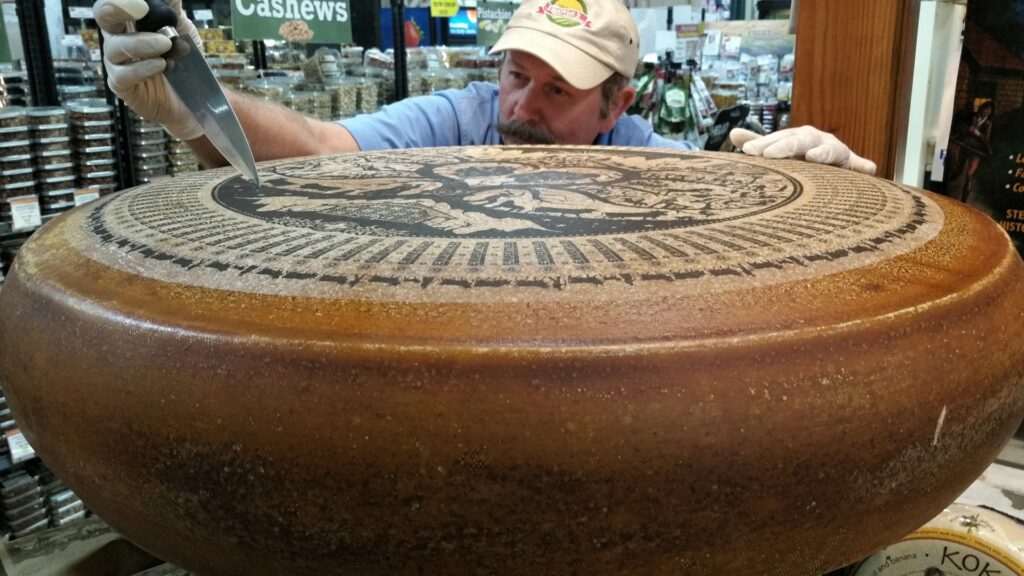
Taxes made the Emmentaler cheese bigger
The large size of Emmentaler cheese is closely linked to historical taxation practices in Switzerland. In the 19th century, cheese producers were taxed based on the number of wheels they made, rather than the total weight of cheese produced. This taxation system incentivized cheesemakers to create larger wheels to reduce their tax burden.
What makes Emmentaler’s size even more remarkable is the incredible milk requirement. To produce a single wheel, cheesemakers need approximately 317 gallons of milk, with only 8-10% of that volume actually becoming cheese. This means that each wheel represents an immense concentration of dairy production effort.

The size is not just a random occurrence but a carefully maintained tradition. Only about 110 factories produce authentic Emmentaler AOP, which represents just 8% of Switzerland’s total cheese production. This exclusivity further emphasizes the cheese’s unique status as the “king of cheeses” and contributes to its reputation as the world’s largest cheese variety.
The wheel’s size is so consistent and controlled that each one follows strict specifications: a diameter of 80 to 100 cm, a thickness of 16 to 27 cm, and an average weight of 90 kg. This precision in production ensures that every Emmentaler wheel maintains its legendary proportions.
The Unique Cheese-Making Process
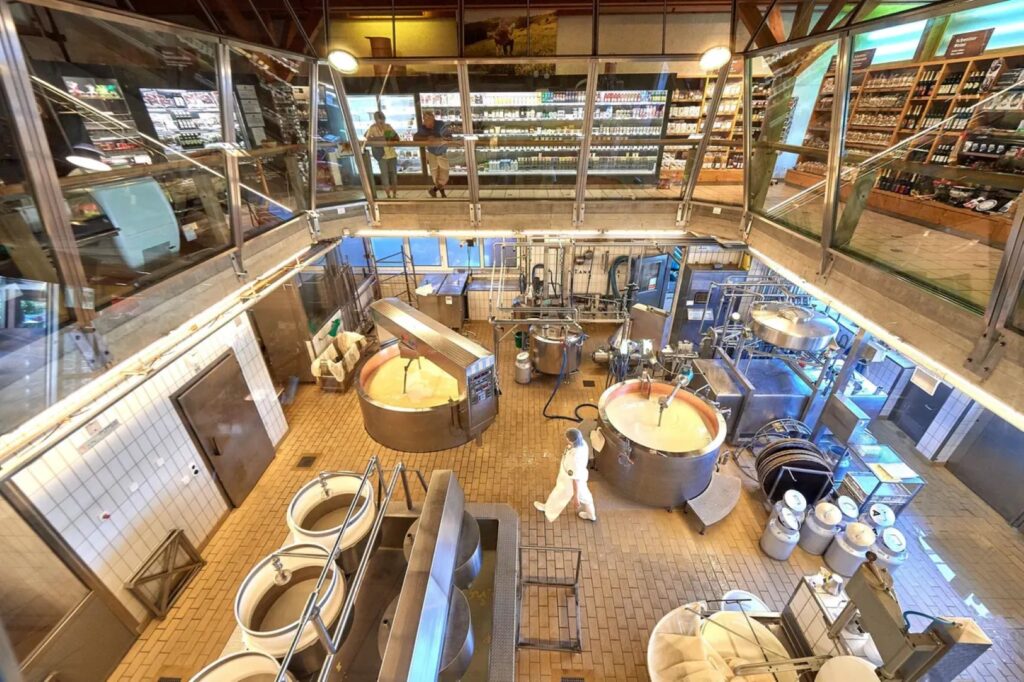
What sets Emmentaler apart from other cheeses is its distinctive production method, which has been refined over centuries. Made from just four simple ingredients—raw cow milk, salt, rennet, and natural bacterial starter cultures—Emmentaler is a prime example of how quality ingredients can produce exceptional results. The use of raw milk contributes to its complex flavor profile, while the natural bacterial cultures play a crucial role in developing its characteristic taste and texture.
The process begins with the careful heating of milk, followed by the addition of rennet and starter cultures. After curd formation, the curds are cut and stirred before being placed into large molds. This meticulous approach ensures that each wheel retains its unique qualities while still adhering to traditional Swiss cheesemaking practices.
For a full deep-dive into how emmentaler cheese is made read our blog post about that here.

The Famous Emmentaler Cheese Holes
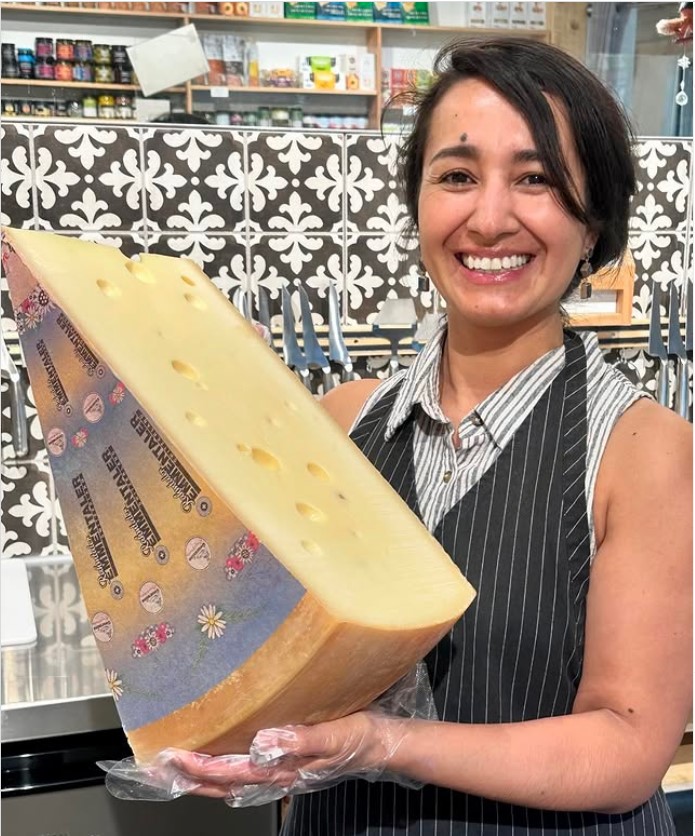
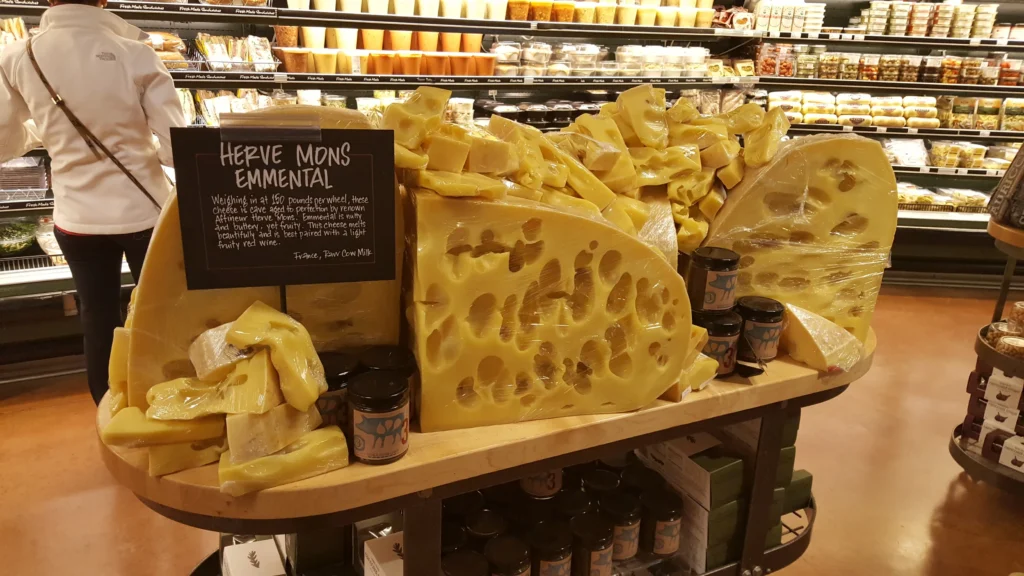
One of the most recognizable features of Emmentaler cheese is its large holes, or “eyes.” These holes are formed during a fascinating maturation process that occurs in fermentation cellars kept at temperatures between 19-24°C (66-75°F). As the cheese ages, carbon dioxide gas produced by bacteria collects within the curds. This gas becomes trapped by the solid rind of the cheese, resulting in the iconic holes that have come to define Emmentaler.
The presence of these holes not only adds to the visual appeal of the cheese but also influences its texture and taste. The pockets of air create a lighter mouthfeel and enhance the nutty flavor that Emmentaler is known for.
A Global Impact
Despite facing challenges in production due to factors like climate change and shifts in dairy farming practices, Emmentaler remains a beloved staple in kitchens around the world. Its mild yet nutty flavor makes it incredibly versatile for various culinary applications like Fondue, Rösti (Swiss Hashbrowns) or Käseschnitte. Whether enjoyed on a classic cheese platter, melted in fondue, or used as a topping for savory dishes, Emmentaler adds a delightful touch to any meal.
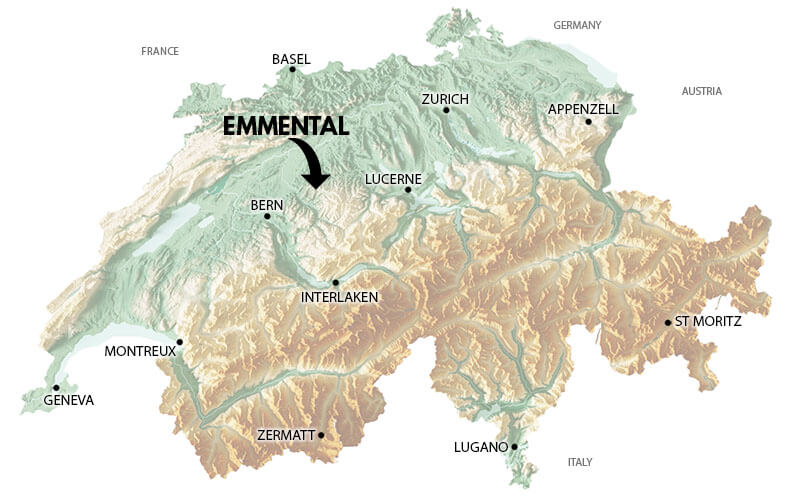
The global journey of Emmentaler from Swiss mountain farms to international tables is a testament to its unique character and enduring appeal. As more people discover this extraordinary cheese, its popularity continues to rise, solidifying its status as one of the most celebrated cheeses worldwide.

Emmentaler, King of Cheese!
In conclusion, Emmentaler cheese is much more than just a large wheel of dairy; it represents centuries of Swiss tradition, craftsmanship, and innovation in cheesemaking. Its impressive size, distinctive holes, and rich flavor profile make it a true marvel in the culinary world. Whether you’re a seasoned cheese connoisseur or simply someone who enjoys good food, Emmentaler offers an experience that is both delicious and memorable. So next time you encounter this giant among cheeses, take a moment to appreciate not just its size but also the story behind it—a story that continues to unfold with every wheel produced.